How Often Should You Rebalance an ETF Portfolio? Calendar vs Threshold
How often to rebalance an ETF portfolio: compare calendar and 5% band rules, fix drift with new contributions, and limit taxes, with a 70/30 example.
The short version
- For most people, checking once or twice a year, or only when an asset class drifts 5 percentage points from target, is plenty. Rebalancing more often mostly adds trades and taxes.
- You can often fix drift without selling: send new contributions, and reinvested dividends, to whatever is underweight.
- In a taxable account, every sale can create a tax bill. In an IRA or 401(k), rebalancing is usually tax free, so you can be more relaxed about it.
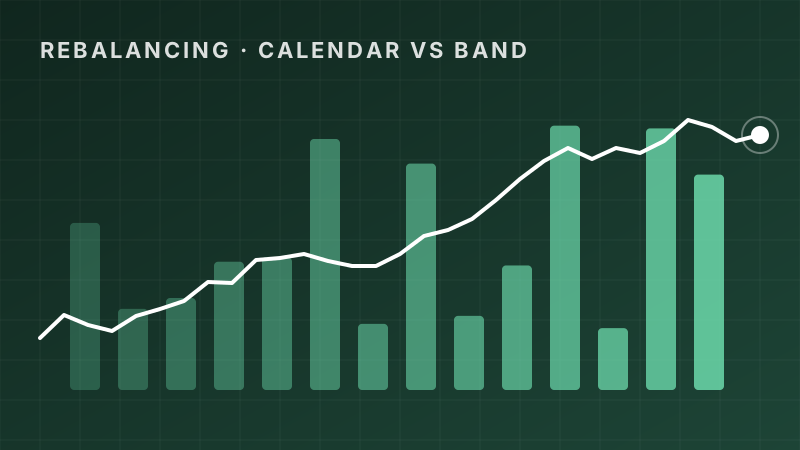
For most ETF investors, rebalancing once a year (or whenever a holding drifts about 5 percentage points away from its target) is enough. A calendar rule is simpler. A band rule reacts to real drift. A hybrid, where you check on a schedule but only trade if you are outside your band, is what I would pick for most people.
What rebalancing actually does
Rebalancing means bringing your portfolio back to its target mix. If you decided on 70% stocks and 30% bonds, and a big stock rally pushes you to 75% stocks, you trade back toward 70/30.
The point is risk control, not extra return. Left alone, a winning asset keeps growing as a share of your portfolio, and you slowly end up taking more risk than you planned. That is fine in a bull market and painful when it turns.
Here is the thing: rebalancing does not guarantee a higher return. It keeps your risk where you chose it. Think of it as maintenance, not a strategy for beating the market.
Calendar rebalancing: simple and predictable
Calendar rebalancing means you pick a date and trade back to target on that date, whether or not anything has drifted. Common choices are once a year, twice a year or quarterly.
- Pros: Easy to remember, no daily monitoring, and it removes emotion from the decision.
- Cons: You might trade when the drift is tiny and not worth the cost. Or you might skip a big move that happened between dates.
Differences between annual and quarterly schedules are generally small, while more frequent trading means more transactions and, in taxable accounts, more realized gains. That is why I lean toward less often. Pick a date that is easy to remember, such as January or your birthday, and stick to it.
Threshold (band) rebalancing: trade only when it matters
Band rebalancing means you set a tolerance and only trade when an asset class moves outside it. The popular version is a 5 percentage point band. With a 70% stock target, you would act if stocks hit 75% or fall to 65%.
There is a second version called a relative band, such as 25% of the target. For a 30% bond holding, that means acting if bonds drift below 22.5% or above 37.5%. Relative bands are wider for big positions and tighter for small ones, which some people prefer when they hold a small slice in something like a satellite fund.
- Pros: You trade only when drift is meaningful, so fewer trades overall in calm markets.
- Cons: You need to look at your weights regularly. In a fast, volatile market you may get several triggers in a row.
My pick: the hybrid approach
Check on a schedule, then trade only if you are outside your band. For example, look every January and every July. If nothing is more than 5 points off target, do nothing. If something is, bring it back to target (or at least back inside the band).
This gets the simplicity of a calendar with the efficiency of a band. It also stops you from obsessing over your account every week. If you want to compare your mix to different growth funds first, the growth ETF lists on GrowthETFs.com and our ETF screener are good places to look around.
Step by step: how to rebalance an ETF portfolio
- Write down your target. For example, 70% stocks and 30% bonds or cash. If you hold several funds in a bucket, list the target for each fund.
- Get current values. Log in to your broker and note the dollar value of every holding across all accounts you want to treat as one portfolio.
- Calculate current weights. Divide each holding by the total. A spreadsheet or the calculators on TopETFs make this quick.
- Compare to your band. If every bucket is within 5 points of target, stop. You are done for now.
- Fix the drift with new money first. Direct fresh contributions, and reinvested dividends, to the underweight fund.
- Sell only what you still need to. If contributions will not fix it, sell the overweight fund. Do it in a tax-advantaged account first if you can.
- Record the date and trades. This helps with taxes and keeps your next check easy.
Worked example: a 70/30 portfolio after a strong year
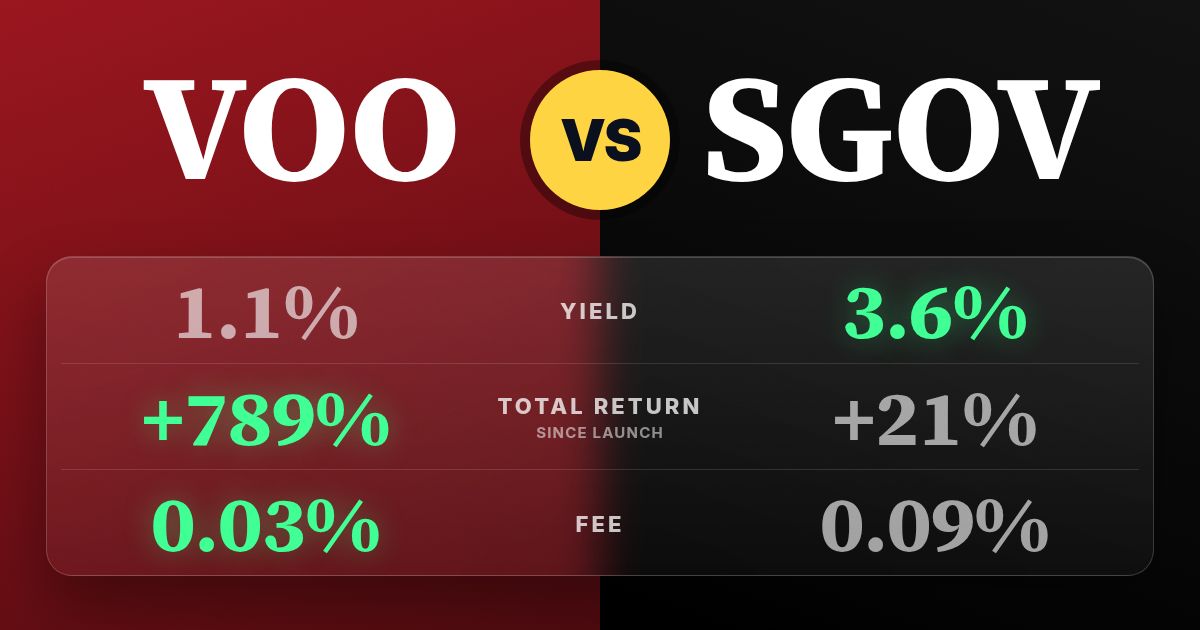
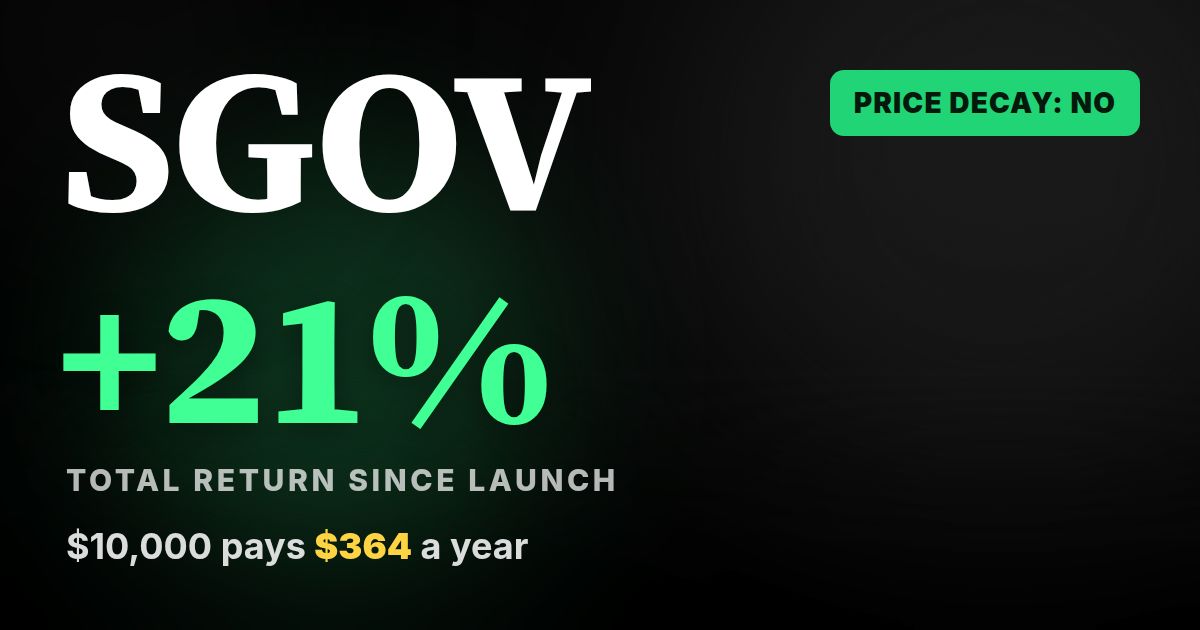
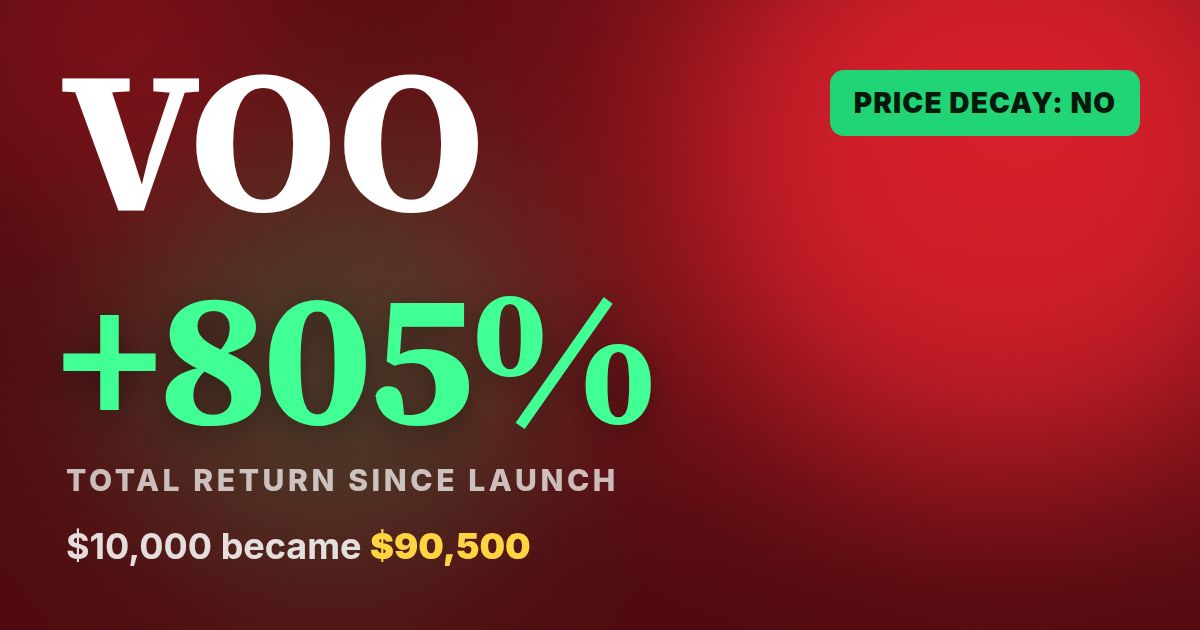
Let's use a simple hypothetical. You start the year with $100,000 split 70/30. Say your stock fund is something like a broad S&P 500 fund such as VOO (fee 0.03%) and your safe bucket is a short Treasury fund such as SGOV (fee 0.09%). These funds are examples only, not recommendations.
Assumptions for the example: stocks gain 35% in a great year and the safe bucket gains 3%. These are made-up numbers to show the math, not a forecast.
| Step | Stocks | Safe bucket | Total |
|---|---|---|---|
| Start of year (70/30) | $70,000 | $30,000 | $100,000 |
| End of year | $94,500 | $30,900 | $125,400 |
| Weights now | 75.4% | 24.6% | 100% |
| Target (70/30) | $87,780 | $37,620 | $125,400 |
Stocks are now at 75.4%, which is 5.4 points above target. That is outside a 5 point band, so a band rule says rebalance. A calendar rule with a year-end date would also have you trade here.
The fix by selling: sell $6,720 of stocks and buy $6,720 of the safe fund. Both sides land exactly on target.
Option two: fix it with new contributions
Instead of selling, you could put all new money into the safe bucket. How much would it take? Adding $9,600 to the safe bucket brings it to $40,500 out of a $135,000 total, which is exactly 30%. If you contribute $800 a month, that is about 12 months of contributions.
No sales, no taxes, same result. The catch is speed: if the market keeps climbing while you wait, the drift can keep growing. For smaller drifts or steady savers, this works great.
Tax drag in taxable accounts
In a regular brokerage account, selling a fund that has gone up creates a capital gain. Hold it more than a year and it is generally taxed at long-term capital gains rates. Hold it a year or less and it is generally taxed at higher ordinary income rates. Confirm the current rules and your own rate with a tax professional.
Back to the example. Your stock position grew from $70,000 to $94,500, so about 26% of its value is gain. Selling $6,720 realizes roughly $1,740 of gain. If you assume a 15% long-term rate (just an illustration), the tax is around $260. Not huge, but it repeats every time you rebalance, and the amounts grow as your portfolio grows.
Ways to reduce the drag:
- Rebalance inside IRAs and 401(k)s first. Trades in these accounts usually do not create a tax bill at the time of the trade.
- Use new money and dividends. Buying the underweight fund creates no sale.
- Use a wider band in taxable accounts. A 5 point band might become 7 or 10 points if taxes bite.
- Be careful with losses. If you sell something at a loss, there are rules (like the wash sale rule) about buying it back. Check the details before you rely on this.
One more thing: you can treat several accounts as one portfolio. Hold the stock-heavy fund in the taxable account and do your rebalancing trades in the IRA. If you are curious how many funds you need in a retirement account, see how many ETFs to own in a Roth IRA.
Edge cases and special situations
- Target-date funds and robo accounts: Many rebalance for you automatically. Check whether yours does before you add manual trades on top.
- 401(k) auto-rebalance: Many plans offer a switch to rebalance on a schedule. It is worth looking for.
- Leveraged ETFs: Funds like TQQQ reset daily and behave very differently from normal ETFs. A fixed 70/30 mix with one is not the same thing. Read why leveraged ETFs can decay first, and expect to need much closer monitoring.
- Several growth funds in the stock bucket: Rebalance the stock bucket as a whole first. Then decide whether to trim the funds inside it. If you hold funds like QQQ and VOO, they overlap a lot, so treating them as one bucket often makes sense. See VOO vs QQQ for how they differ.
- Withdrawing in retirement: Take money from whatever is overweight. That rebalances while you spend.
- Small portfolios: If you only have a few thousand dollars, trade costs and effort matter more than 3 or 4 points of drift. Let contributions do the work.
Common mistakes
- Rebalancing too often. Weekly or monthly checks lead to extra trades and extra taxes with little benefit.
- Ignoring taxes. Selling winners in a taxable account without checking the gain first can turn a small drift into a real bill.
- Never rebalancing. After a long bull run, a 70/30 portfolio can quietly become 85/15. That is a different risk level than the one you chose.
- Forgetting other accounts. Your IRA, 401(k) and taxable account all count. Looking at just one can give you a false picture.
- Changing the target mid-rally. Rebalancing is about sticking to a plan. Moving the target because stocks look hot is a market view, not rebalancing.
- Waiting for a perfect moment. No one can time it. Pick a rule and follow it.
Rebalancing checklist
- I wrote down my target mix and my band (for example 5 points).
- I picked check dates (for example once or twice a year).
- I added up all accounts and calculated current weights.
- I used new contributions and dividends to buy the underweight fund first.
- I made any needed sales in a tax-advantaged account where possible.
- I checked the gain before selling anything in a taxable account.
- I noted the date, the trades and the new weights.
FAQ
Is it better to rebalance monthly, quarterly or annually?
For most people, annually or twice a year is enough. More frequent rebalancing tends to add trades and taxes without a meaningful improvement in risk control.
What is the 5% rebalancing rule?
It means you rebalance when an asset class drifts 5 percentage points from its target. With a 70% stock target, that is when stocks reach 75% or fall to 65%.
Can I rebalance without selling anything?
Yes. Direct new contributions and reinvested dividends into the underweight fund until the mix is back on target. It works best when you add money regularly.
Do I pay taxes when I rebalance an ETF portfolio?
In a taxable account, selling a fund at a gain can create capital gains tax. Trades inside an IRA or 401(k) usually do not trigger tax at the time of the trade, but check your account rules.
Should I rebalance after a big market drop?
If your stock weight falls outside your band, your rule says to buy stocks. It can feel uncomfortable, but following the rule is the whole point. Do not abandon your plan because of fear.
Benjie's bottom line
Rebalancing is not exciting, and that is fine. Pick a target, check once or twice a year, use a 5 point band, and let new contributions do most of the work. In taxable accounts, be extra careful about what you sell.
This isn't a buy or sell signal, and your best band and schedule depend on your account types, taxes and goals. Do your own due diligence, and talk to a tax professional if the numbers get big. If you are still choosing funds for the growth side, our best growth ETFs by total return, fees and size is a good place to start, and you can check the cost of a core fund like VOO in the VOO review.
How this article was made: Benjie picks every topic based on what he finds useful as a dividend investor and what readers ask about. Parts of this article were drafted with help from AI tools, then edited, fact-checked and shaped by Benjie. All fund numbers come from the TopETFs database and update daily.
Disclaimer: TopETFs.com is published by Dividend Empire LLC for educational and entertainment purposes only. We are not financial advisors, and nothing on this site is financial advice, a recommendation, or a solicitation to buy or sell any security. ETF data is compiled from public sources and fund issuers, may be delayed, inaccurate or outdated, and may differ from the fund sponsor's own figures. Yields are trailing distribution yields, are not guaranteed, and distributions may include return of capital, which reduces your cost basis and is not a measure of performance. Total returns are since each fund's inception unless noted and are not comparable across funds with different start dates. Past performance does not guarantee future results. Investing carries risk, including loss of principal. Read each fund's prospectus and consult a licensed financial advisor before investing. Dividend Empire LLC receives compensation from ETF issuers for sponsored placements, which are labeled as such.