Treasury ETF vs High-Yield Savings: Which Is Better for Cash?
Treasury ETF vs high yield savings: compare after-tax yield, state tax exemption, FDIC vs government backing and liquidity, with a worked $50,000 example.
The short version
- Compare after-tax yield, not the headline rate. Treasury interest is exempt from state and local income tax, savings interest is not, so a slightly lower Treasury rate can still win in a high-tax state.
- A high-yield savings account is FDIC insured (up to the limit per bank and ownership category). A Treasury ETF holds U.S. government debt, but the fund itself is not FDIC insured and its price can move a little.
- Savings wins on simplicity and a fixed share price. A Treasury ETF wins when the state tax break matters, when you already have a brokerage account, or when you want to hold cash next to your investments.
Neither one is automatically better. A high-yield savings account (HYSA) is usually the simplest home for cash, but a short-term Treasury ETF like SGOV can leave you with more money after tax if you live in a state with meaningful income tax and the two pre-tax rates are close. The only fair way to decide is to compare after-tax yield, then weigh safety and access.
What you are actually comparing
A high-yield savings account is a bank deposit. The bank pays you a variable rate (quoted as APY, the annual yield including compounding), and you can change it or leave it any time. The bank can lower that rate whenever it wants.
A Treasury ETF is a fund that owns U.S. Treasury securities. The ultra-short ones, like SGOV, hold Treasury bills that mature in roughly three months or less. Because those bills keep rolling over, the fund's income follows short-term interest rates up and down, much like a savings rate does.
Here's the thing: both are "cash-like," but they are not the same product. One is a deposit. The other is a fund share that trades on an exchange. That difference drives everything below.
How to compare the yields fairly
Quoted numbers are not apples to apples, so do a little cleanup first.
- APY vs fund yield. A savings APY already includes compounding. A fund yield is based on the income the fund has paid or is earning, and different sites use different measures. Check which yield your fund page is showing before you compare.
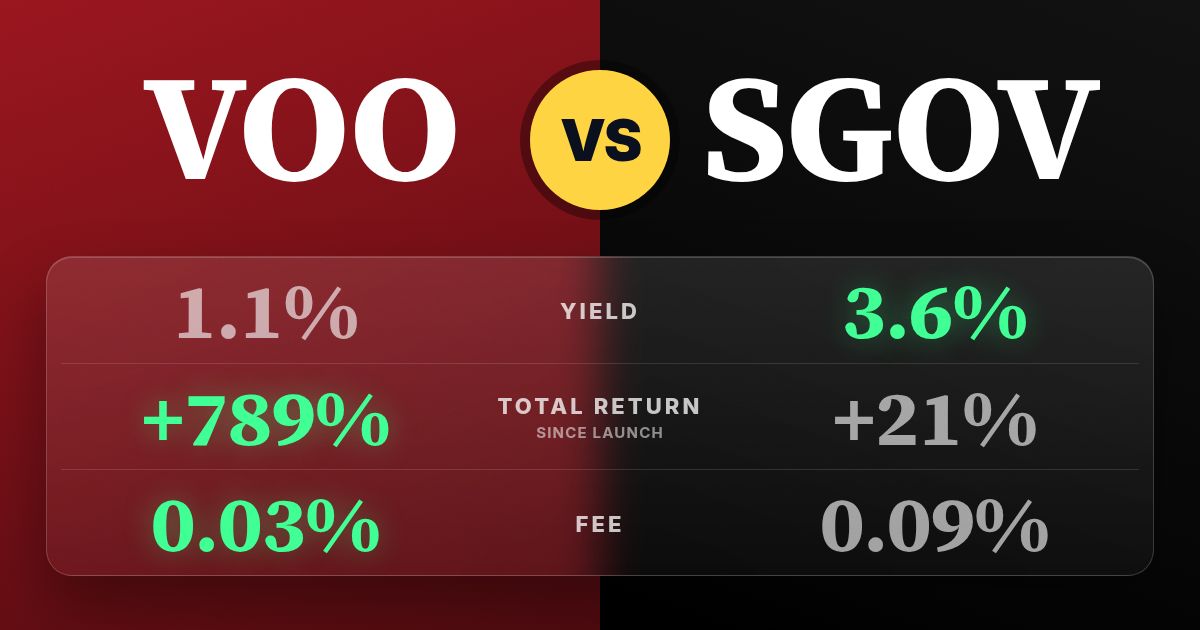
- Fees are already in the fund number. SGOV shows an expense ratio of 0.09%. That fee comes out of the fund's income before it reaches you, so you should not subtract it again from the yield.
- Both rates move. A T-bill fund's yield resets as bills roll over. A savings rate resets when the bank decides. Today's gap is a snapshot, not a promise.
- Taxes change the answer. This is the step most people skip, and it is the next section.
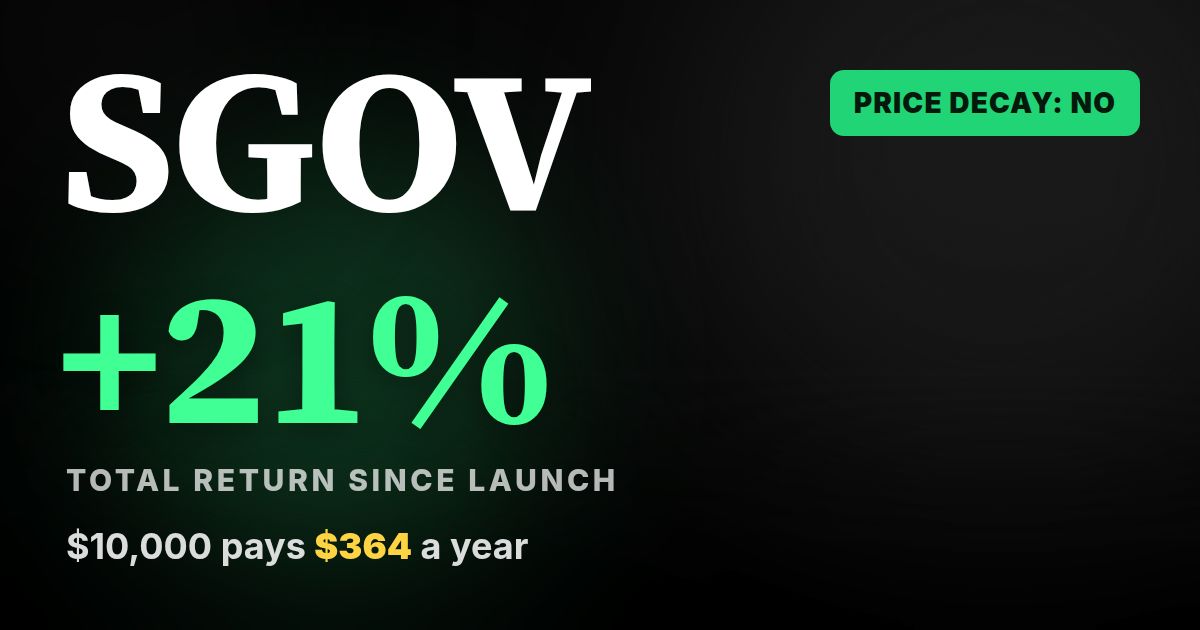
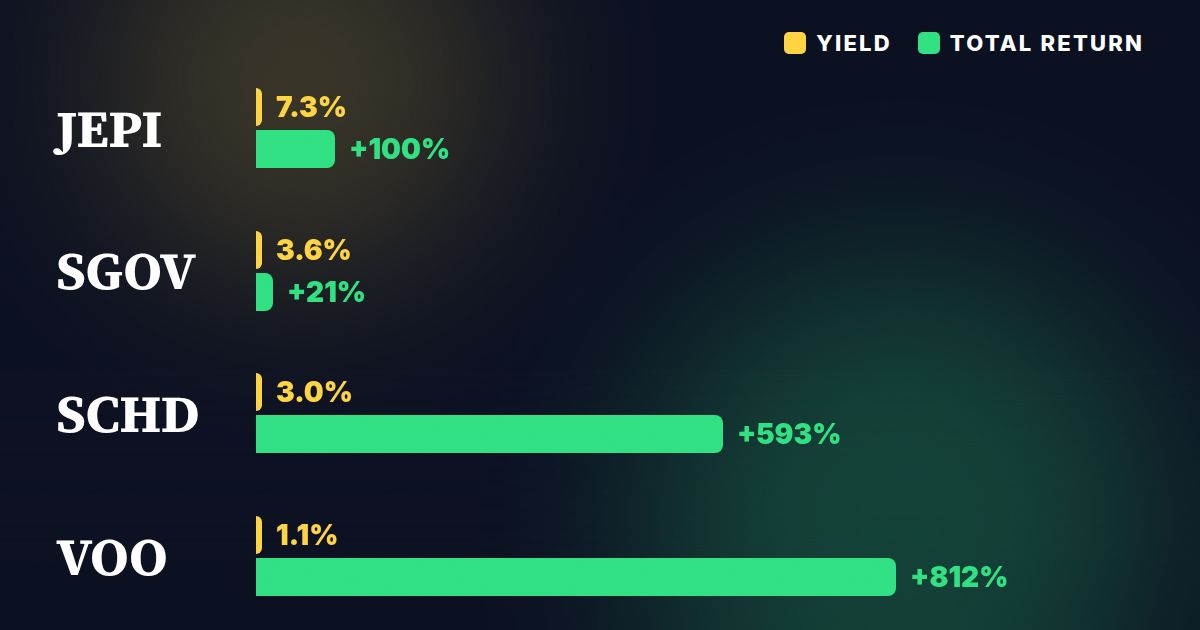
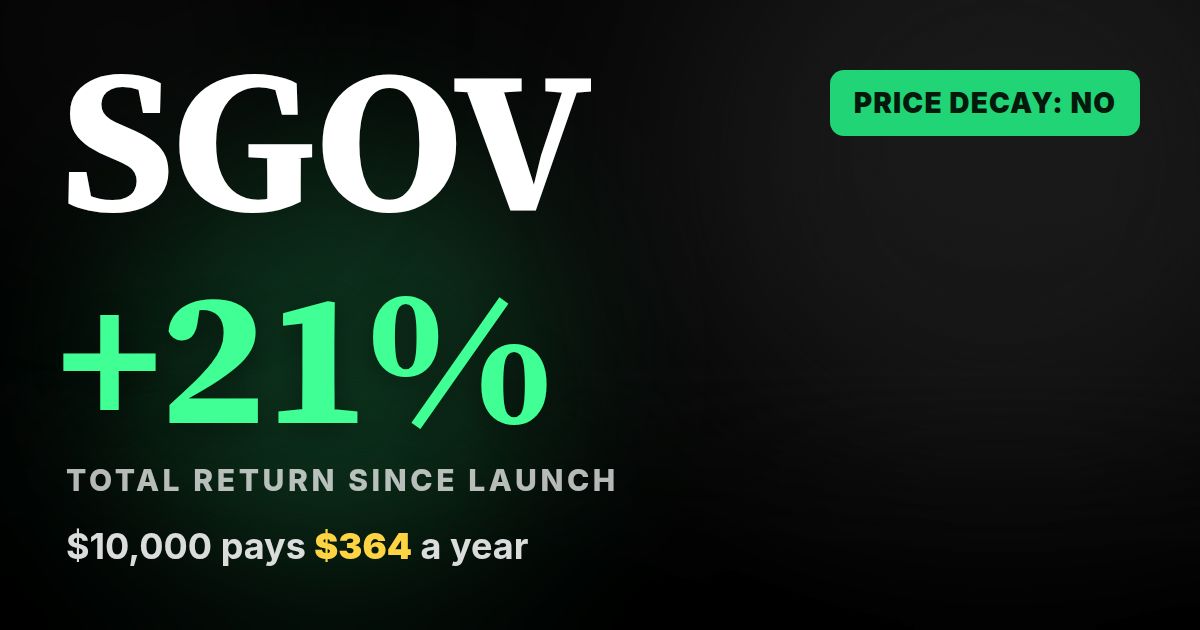
For reference, SGOV currently shows a yield of 3.64% in our data. Your savings account will show its own APY. Put the two side by side, then adjust for tax.
The state tax exemption on Treasury interest
Interest from U.S. Treasury securities is taxed by the federal government but is generally exempt from state and local income tax. Interest from a bank savings account is taxed at both levels.
Funds that hold Treasuries can often pass that benefit through to you, but not always automatically. Some states only allow the exemption if a minimum share of the fund's assets are in U.S. government obligations, and fund companies publish the percentage each year. A fund that holds only T-bills is a natural fit, but confirm with the fund's tax information and your state's rules.
A few cases where the exemption does not help at all:
- You live in a state with no income tax.
- You hold the ETF inside an IRA or 401(k), where the state and federal tax question works differently.
- Your state does not follow the usual exemption for fund distributions.
At the federal level, there is no special break. Treasury ETF distributions and savings interest are both generally taxed as ordinary income, not as qualified dividends.
FDIC insurance vs government backing
These two protections sound similar and are not.
High-yield savings: deposits at an FDIC insured bank are protected up to the standard limit per depositor, per bank, per ownership category. Confirm the current limit and your account structure with the FDIC. If you hold more than the limit at one bank, spread it out.
Treasury ETF: the fund owns Treasury bills, which are backed by the full faith and credit of the U.S. government. But you do not own the bills directly. You own shares of a fund. The fund is not FDIC insured, and its share price can wiggle slightly with interest rate changes and trading. For a three-month-or-less fund those moves are normally small, but they are not zero. If your broker failed, SIPC protection generally applies to the securities in your account, which is a separate thing from FDIC insurance.
My plain read: both are very safe places for cash. Neither is a guarantee of a fixed number in the way a bank balance is.
Liquidity and settlement
Savings money is easy to reach, but not instant. An ACH transfer to your checking account commonly takes one to three business days, and some banks limit transfers.
An ETF trades only while the market is open. When you sell, the trade generally settles the next business day in the U.S. (standard T+1 settlement). Then you still need to move the cash from your brokerage account to your bank, which can take a day or more. So the real timeline from "sell" to "money in my checking account" is often two to three business days.
That means neither is great for money you need in the next hour. If you need same-day cash, keep a small amount in checking.
Step by step: how to decide
- Write down both pre-tax rates. Use your savings APY and the Treasury ETF yield from the fund page.
- Find your marginal rates. Your federal bracket and your state income tax rate. Confirm both for the current year.
- Compute the after-tax savings yield. Savings APY times (1 minus federal rate minus state rate).
- Compute the after-tax Treasury yield. Fund yield times (1 minus federal rate). Skip the state rate only if you have confirmed the exemption applies to that fund in your state.
- Compare in dollars. Multiply each by the amount of cash you actually hold.
- Weigh the non-tax stuff. FDIC limits, how fast you need the money, and whether you want it in your brokerage account.
Worked example: $50,000 of cash
These rates and tax figures are assumptions for illustration, not today's market. Assume a savings APY of 4.00%, a Treasury ETF yield of 3.60%, a 24% federal rate, and the state rate shown in each scenario. Note the savings rate is higher before tax in both cases.
Scenario A: 5% state income tax
| Item | HYSA | Treasury ETF |
|---|---|---|
| Pre-tax interest | $2,000 | $1,800 |
| Federal tax (24%) | $480 | $432 |
| State tax (5%) | $100 | $0 |
| After tax | $1,420 | $1,368 |
The savings account still wins by $52 a year. The state exemption helped, but not enough to close the pre-tax gap.
Scenario B: 9% state income tax
| Item | HYSA | Treasury ETF |
|---|---|---|
| Pre-tax interest | $2,000 | $1,800 |
| Federal tax (24%) | $480 | $432 |
| State tax (9%) | $180 | $0 |
| After tax | $1,340 | $1,368 |
Now the Treasury ETF wins by $28 a year. Same pre-tax rates, different state, different answer.
A quick shortcut: with a 24% federal and 5% state rate, the Treasury yield needs to be roughly 93% of the savings rate to break even (0.71 divided by 0.76). With a 9% state rate, the needed ratio drops to about 88%. The higher your state tax, the more of a rate gap the exemption can absorb.
One more honest note: on $50,000, the difference is tens of dollars a year. Do not over-engineer this. It matters more at six figures or in a high-tax state.
Who each one tends to fit
High-yield savings tends to fit people who want a fixed balance, FDIC protection, an emergency fund they never think about, and zero trading steps. It is also the cleanest choice if you live in a no-income-tax state.
A Treasury ETF tends to fit people in higher-tax states, people who already hold investments at a brokerage and want a cash sleeve in the same account, and investors who want to park cash that may be redeployed soon. It also suits retirees building the cash portion of a plan like the one in our 3-bucket retirement strategy worked example.
If you are sitting on a lump sum and deciding how much to keep in cash versus income funds, our guide on turning a lump sum into monthly income with ETFs walks through the trade-offs.
Common mistakes
- Comparing pre-tax rates only. The headline number ignores state tax, which can flip the result.
- Assuming the state exemption is automatic. Check the fund's U.S. government obligations percentage and your state's rule.
- Treating the ETF like a bank account. It has no FDIC insurance and a share price that can move a little.
- Ignoring the timeline. Selling on a Friday afternoon and expecting cash on Saturday does not work.
- Chasing small rate gaps. Moving money for a few basis points can cost you time and, in a taxable account, a small gain or loss on the sale.
- Forgetting the FDIC limit. Large savings balances at a single bank can exceed coverage.
- Forgetting that both rates float. Re-check every few months.
Edge cases
- Inside an IRA: the state tax advantage mostly disappears from the decision, so compare pre-tax yield and convenience.
- Money market funds: a third option many brokers offer. Some hold mostly Treasuries and others do not, so read what is inside before assuming the tax treatment.
- Buying T-bills directly: you can buy them from the government or through a broker. That avoids a fund fee, but you handle maturities yourself.
- Very small balances: if the dollar gap is under a few dollars a month, pick the one you will actually use.
Quick checklist
- Savings APY and Treasury ETF yield written down
- Federal and state marginal rates confirmed for this year
- State exemption confirmed for the specific fund
- After-tax dollars calculated for your balance
- FDIC limit checked
- Timeline for getting cash out is acceptable
If you want to see what a given balance can earn, try the TopETFs calculators or project future income with Dividend Projection.
FAQ
Is a Treasury ETF safer than a high-yield savings account?
Not really safer, just different. The holdings are backed by the U.S. government, but the ETF is not FDIC insured and its price can move slightly. A savings account within the FDIC limit has a fixed balance.
Can you lose money in a Treasury ETF like SGOV?
It is possible for the share price to dip slightly, especially if rates move quickly or you trade at a bad moment. For ultra-short funds the moves are normally small, but you should not treat it as a guaranteed balance.
Are Treasury ETF dividends really exempt from state tax?
Often yes, because the income comes from Treasury interest. But some states require a minimum percentage of fund assets in U.S. government obligations, so confirm with the fund's tax information and your state.
How fast can I get my money from each one?
Savings transfers usually take one to three business days. An ETF sale settles the next business day, then you still need to move the cash to your bank, so plan for a few days.
Which is better for an emergency fund?
Most people are better served by a savings account because the balance is stable and you can reach it without a market open. A Treasury ETF can work for a second layer of cash you will not need immediately.
Do I still owe federal tax on Treasury ETF income?
Yes. Treasury interest passed through a fund is generally taxed as ordinary income at the federal level.
Benjie's bottom line
I do this math the same way every time: after-tax yield first, safety and access second. In a no-tax state, savings usually wins on simplicity. In a high-tax state, a Treasury ETF can come out ahead even with a lower headline rate. Either way, the gap is often smaller than the internet makes it sound.
This isn't a buy or sell signal. Check your own rates, confirm your state's rule, and talk to a tax professional if the amount is large. For more cash and income ideas, see our guide on how much you can safely withdraw in retirement.
ETFs in this story
How this article was made: Benjie picks every topic based on what he finds useful as a dividend investor and what readers ask about. Parts of this article were drafted with help from AI tools, then edited, fact-checked and shaped by Benjie. All fund numbers come from the TopETFs database and update daily.
Disclaimer: TopETFs.com is published by Dividend Empire LLC for educational and entertainment purposes only. We are not financial advisors, and nothing on this site is financial advice, a recommendation, or a solicitation to buy or sell any security. ETF data is compiled from public sources and fund issuers, may be delayed, inaccurate or outdated, and may differ from the fund sponsor's own figures. Yields are trailing distribution yields, are not guaranteed, and distributions may include return of capital, which reduces your cost basis and is not a measure of performance. Total returns are since each fund's inception unless noted and are not comparable across funds with different start dates. Past performance does not guarantee future results. Investing carries risk, including loss of principal. Read each fund's prospectus and consult a licensed financial advisor before investing. Dividend Empire LLC receives compensation from ETF issuers for sponsored placements, which are labeled as such.