How to Invest for Your Child's Future With ETFs: Custodial, 529 or Roth?
Custodial UTMA, 529 or custodial Roth IRA? Compare the three ways to invest for your child with ETFs, plus the kiddie tax and a $100 a month example.

The short version
- There are three main accounts: a 529 plan (best if the money is for school), a UTMA/UGMA custodial account (most flexible, but the child gets it at 18 to 21), and a custodial Roth IRA (powerful, but your child needs earned income).
- A simple, low-cost, broad index ETF held for 18 years does most of the work. Time and steady contributions matter more than picking the perfect fund.
- $100 a month from birth puts in $21,600 over 18 years. At a hypothetical 7% a year, that grows to roughly $43,000.
To invest for your child's future with ETFs, first decide what the money is for, then pick the account that fits: a 529 for education, a custodial UTMA/UGMA account for general flexibility, or a custodial Roth IRA if your child has earned income. Inside the account, a low-cost broad index ETF bought on a steady monthly schedule is a sound, simple approach.
I get this question a lot, and the honest answer is that the account matters as much as the fund. The wrong account can cost you taxes, flexibility or financial aid. Let's walk through each option, the steps, and a real $100 a month example.
The three main ways to invest for a child
Here is how they compare at a glance. Rules and limits change, so confirm current details with your broker or the IRS before you act.
| Account | Best for | Who controls it | Main catch |
|---|---|---|---|
| 529 plan | School costs | You (the owner) | Non-school withdrawals can trigger tax and a penalty on earnings |
| UTMA/UGMA | Anything that helps the child | You until the child reaches the age of majority | Child gets full control, and kiddie tax can apply |
| Custodial Roth IRA | Long-term wealth | You until the child is an adult | Needs earned income, and contributions are capped |
529 plan: the education account
A 529 is a tax-advantaged account built for education savings. Your money grows without annual tax on the gains, and withdrawals used for qualified education expenses are generally not taxed at the federal level. Many states also offer a tax break for contributing, but that depends on your state.
You stay the owner. If your child doesn't need the money for school, you can usually change the beneficiary to another family member. Withdrawals for non-qualified uses generally mean income tax plus a 10% penalty on the earnings part (not on what you put in). There are also limited rules that let some leftover 529 money roll into a Roth IRA for the beneficiary, with conditions and caps. Check the current details before counting on it.
A 529 usually offers a menu of funds rather than any ETF you choose. Many plans offer index-style portfolios and age-based options that get more conservative as college gets closer.
UTMA/UGMA custodial account: the flexible one
A custodial account lets you buy ETFs in a taxable brokerage account that legally belongs to your child. You manage it as the custodian. The money can be used for anything that benefits the child: a car, a first apartment, a business, school or a down payment.
The trade-off is control. A gift into a custodial account is irrevocable, and the child takes over at the age of majority set by your state, which is commonly 18 to 21 and sometimes later. At that point it's their money, no strings. If you're not comfortable with an 18-year-old having full access, that's a real factor.
Custodial accounts can also count more heavily in financial aid formulas than parent-owned assets like a 529. If aid matters to you, look into that before you choose.
Custodial Roth IRA: the long game
This one has a hard requirement: your child must have earned income, such as pay from a job or legitimate self-employment. Allowance and gifts don't count. The yearly contribution is limited to the lower of their earned income or the annual IRA limit (confirm the current figure).
The upside is huge time. Money in a Roth grows tax-free, and a child has decades before retirement. The downside is that it's locked up for retirement purposes, with some exceptions for contributions and certain uses. If you want the bigger picture on how to run a Roth, see my guide on how many ETFs to own in a Roth IRA.
Step by step: how to get started
- Decide the goal. School, general head start, or retirement for a working teen? That picks the account.
- Open the account. Most major brokers offer custodial UTMA/UGMA and custodial IRA accounts, and each state runs or endorses 529 plans. You'll need your child's Social Security number.
- Link your bank and set a monthly transfer. Automating a small amount beats waiting until you feel "ready."
- Pick a simple ETF (or a 529 index portfolio). One broad stock index fund is plenty for a long horizon.
- Turn on dividend reinvestment if your broker offers it, so payouts buy more shares automatically.
- Check once or twice a year. Don't tinker. If you want a rule for adjusting, read about how often to rebalance an ETF portfolio.
What to buy inside the account
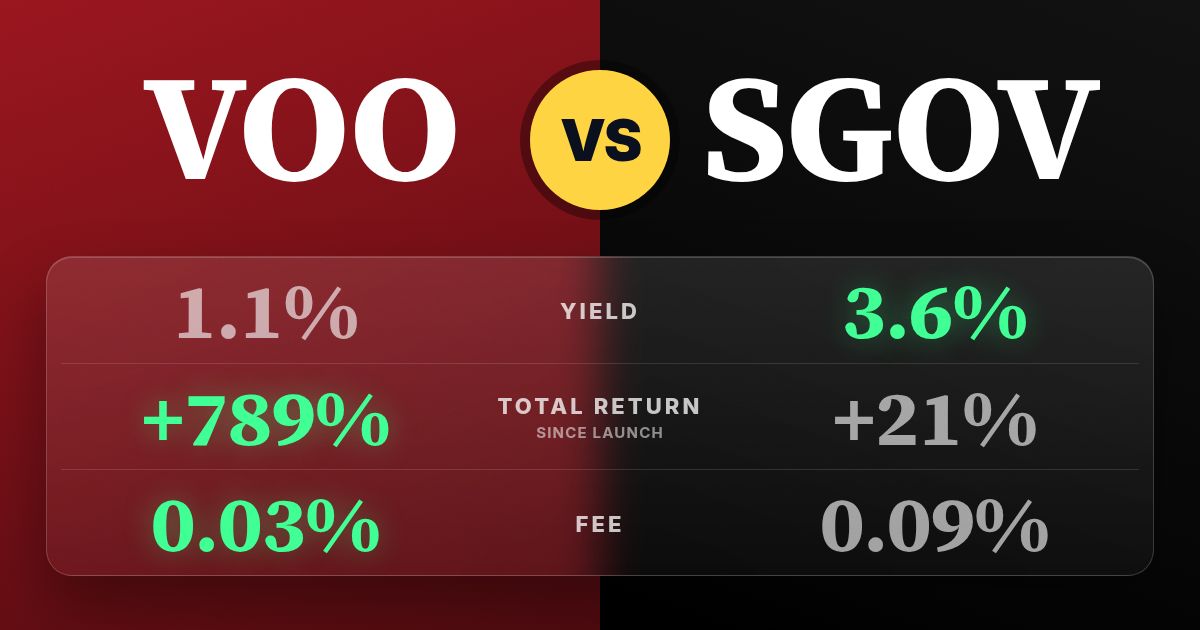
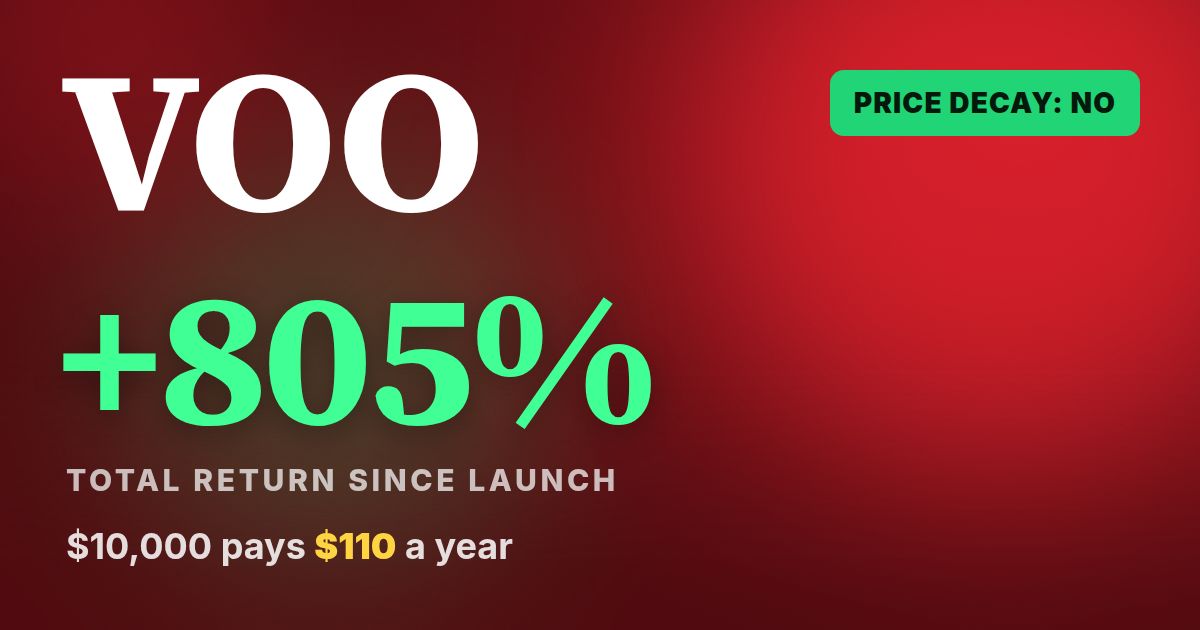
Over 18 years, fees and consistency matter more than cleverness. A broad S&P 500 fund like VOO charges an expense ratio of 0.03%, which means about $3 a year per $10,000 invested. Its total return since inception is 789%, but keep in mind that figure covers a specific window since the fund launched, and past results don't predict future ones.
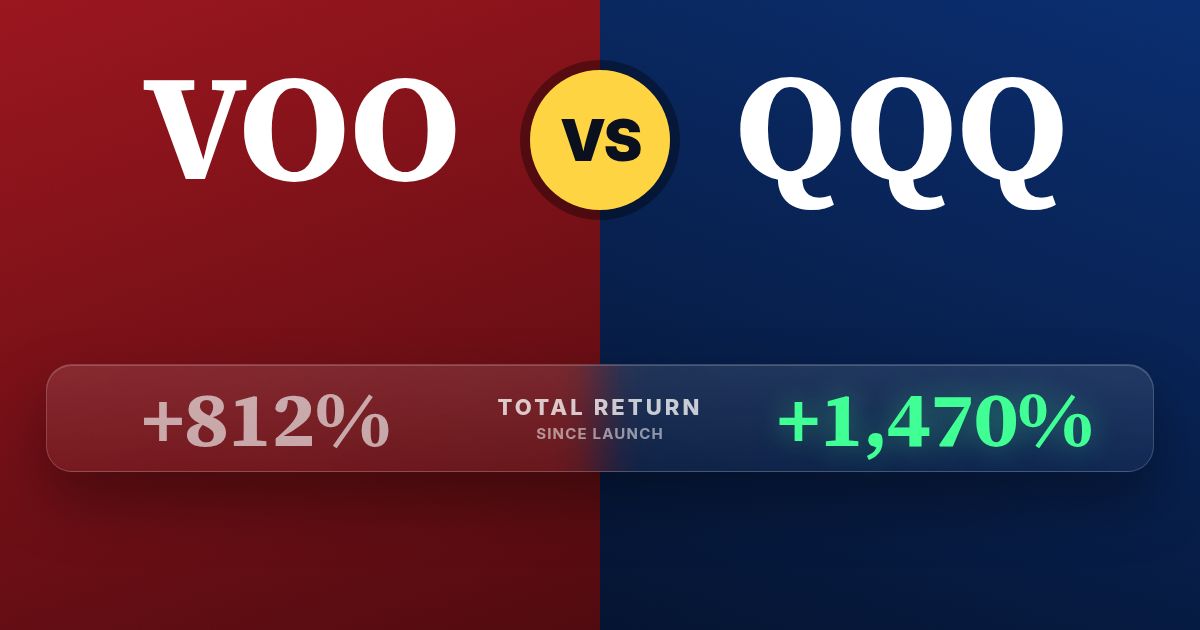
Many families also use a total market or global index fund instead. Any of these can work. I'd be careful with leveraged funds like TQQQ. They can have eye-catching returns in some periods, but they are built for short-term trading and can swing wildly. That's not what you want for a child's long-term account.
If the money is needed soon, for example a child heading to college in a couple of years, many people shift part of it toward short-term Treasury funds such as SGOV to reduce the risk of a stock drop right before the bill is due. That's a trade-off, not a rule: you give up growth to gain stability.
Curious about overlap if you add several funds? I covered that in how to check ETF overlap. For a child's account, one or two funds is usually enough.
Worked example: $100 a month from birth
Let's say you start the day your child is born and invest $100 every month for 18 years. That's $21,600 contributed. The table below uses hypothetical average annual returns, rounded, with monthly contributions. These are assumptions, not forecasts.
| Assumed return | You put in | Value at 18 |
|---|---|---|
| 5% a year | $21,600 | About $35,000 |
| 7% a year | $21,600 | About $43,000 |
| 9% a year | $21,600 | About $53,600 |
Notice what's happening at 7%: roughly half of the final balance is growth you didn't have to contribute. The early years do the heavy lifting because those dollars have the longest time to compound.
If you leave the money alone to age 21 (three more years, no new deposits needed to see the effect), the 7% case grows further. Contributing through 21 would take it to roughly $57,000. Real markets don't move in a straight line, so some years will be negative. That's normal over 18 years. It's why the monthly schedule helps: you buy more shares when prices are low.
Want to run your own numbers? Try the calculators on our tools page. For a bigger lump-sum scenario, see how to invest $100,000 for 10 years.
The kiddie tax, in plain English
The kiddie tax exists to stop parents from shifting lots of investment income to a child to get a lower tax rate. In general, a child's unearned income (dividends, interest, capital gains) gets a small tax-free amount, then a next slice taxed at the child's rate, and anything above a set threshold can be taxed at the parents' rate. The thresholds change every year, and the age rules extend past 18 for some full-time students, so check the current IRS rules.
For a $100 a month account, the income is small and the kiddie tax rarely bites early on. It becomes more relevant as the balance grows. Tax-efficient ETFs help here. If you want the reasoning, read ETF or index mutual fund in a taxable account. A 529 and a Roth IRA avoid this issue because growth isn't taxed along the way.
Common mistakes to avoid
- Putting it in your own name. If you just buy ETFs in your account "for the kids," it's legally yours (good for control, bad for tax planning and clarity). Use the right account for the goal.
- Forgetting the child gets control. With UTMA/UGMA, there's no taking it back. Plan for that conversation.
- Over-funding a 529. If scholarships or a cheaper school are possible, don't put in more than you reasonably expect to use.
- Chasing hot funds. A fund that went up a lot recently isn't a promise of what's next.
- Ignoring financial aid effects. Account ownership can change how aid formulas treat the money.
- Skipping automation. Skipped months add up. Set it and let it run.
- Claiming income that isn't earned. A custodial Roth requires real earned income, with records.
Quick checklist
- Goal defined: school, flexible head start, or retirement?
- Account type chosen and opened with the right owner and beneficiary.
- Monthly automatic transfer set up.
- One or two low-cost, broad ETFs (or a 529 index portfolio) selected.
- Dividend reinvestment on.
- Current tax limits and state rules confirmed.
- Plan for what happens when the child gets access.
FAQ
What is the best account to invest for a child?
It depends on the goal. A 529 is built for education, a UTMA/UGMA is the most flexible, and a custodial Roth IRA is best for long-term growth if your child has earned income. Many families use more than one.
Can I open a brokerage account for my child and buy ETFs?
Yes. A custodial UTMA/UGMA account lets you buy ETFs on your child's behalf. You manage it until your child reaches the age of majority in your state.
Does my child need a job to have a Roth IRA?
Yes. A custodial Roth IRA requires earned income, and contributions can't exceed what the child earned (or the annual limit, whichever is lower). Confirm the current limit with the IRS.
What happens to a UTMA account when my child turns 18?
The age depends on your state, commonly 18 to 21 and sometimes later. At that point the child takes full legal control and can spend the money however they like.
How much should I invest for my child each month?
Whatever you can keep up consistently. Even $100 a month for 18 years can grow to a meaningful sum at a reasonable long-term return, though no return is guaranteed.
Is the kiddie tax a big deal for small accounts?
Usually not at small balances, since a portion of a child's unearned income is taxed lightly or not at all. It matters more as the account and its income grow, so check current thresholds.
Benjie's bottom line
If I had to boil it down: pick the account that matches the purpose, pick a boring low-cost index ETF, automate the deposits, and then leave it alone. Starting early with a small amount beats waiting for a big lump sum.
None of this is a buy or sell signal, and I'm not a tax professional. Rules, limits and state details change, so do your own due diligence and talk to a tax pro if your situation is complicated. If you want to explore growth-focused funds further, our friends at GrowthETFs.com and our best growth ETFs guide are good places to keep learning.
ETFs in this story
How this article was made: Benjie picks every topic based on what he finds useful as a dividend investor and what readers ask about. Parts of this article were drafted with help from AI tools, then edited, fact-checked and shaped by Benjie. All fund numbers come from the TopETFs database and update daily.
Disclaimer: TopETFs.com is published by Dividend Empire LLC for educational and entertainment purposes only. We are not financial advisors, and nothing on this site is financial advice, a recommendation, or a solicitation to buy or sell any security. ETF data is compiled from public sources and fund issuers, may be delayed, inaccurate or outdated, and may differ from the fund sponsor's own figures. Yields are trailing distribution yields, are not guaranteed, and distributions may include return of capital, which reduces your cost basis and is not a measure of performance. Total returns are since each fund's inception unless noted and are not comparable across funds with different start dates. Past performance does not guarantee future results. Investing carries risk, including loss of principal. Read each fund's prospectus and consult a licensed financial advisor before investing. Dividend Empire LLC receives compensation from ETF issuers for sponsored placements, which are labeled as such.