Can You Lose Money in Index Funds? Yes, and Here's What History Says
Yes, index funds can lose money, sometimes a lot. Here is how big the drops were, how long recoveries took, and how time horizon changes your risk.
The short version
- Yes, you can lose money in an index fund. A broad stock index fund can fall 30% to 50% or more in a bad stretch, and it can stay down for years.
- The loss only becomes permanent if you sell at the bottom or need the money before a recovery. Over long periods, diversified U.S. stock indexes have historically recovered, but that is history, not a promise.
- Time horizon is the main dial. Money you need in the next few years does not belong in stocks. Money you will not touch for 15 to 20 years has a very different risk profile.
Yes, you can lose money in index funds. An index fund simply owns the market, so when the market falls, your fund falls with it. Diversification protects you from one company failing, not from the whole market having a terrible year.
That sounds scary, and it should be taken seriously. But the useful question is not 'can I lose money?' It is 'how much, for how long, and what turns a paper loss into a real one?' Let's walk through it with real-world math.
Why index funds fall in the first place
An index fund (or index ETF) is a basket that tracks a market index, like the S&P 500. It does not try to dodge bad markets. If the index drops 20%, the fund drops about 20%, minus a tiny fee.
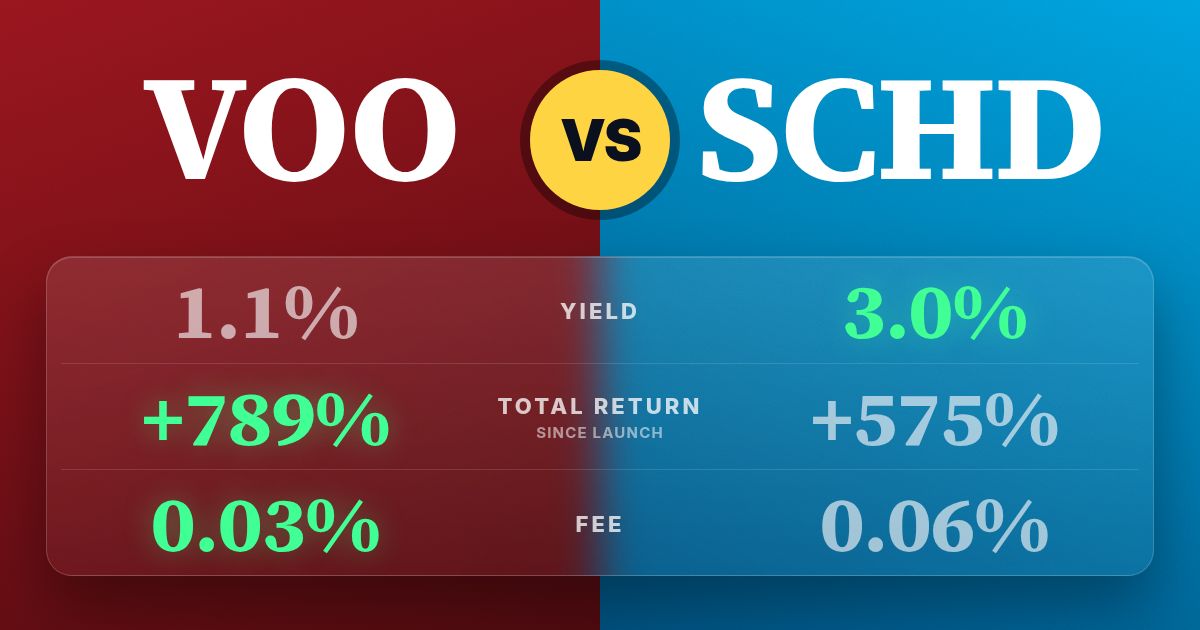
Take a fund like VOO, which tracks the S&P 500. Its expense ratio (the yearly fee, taken out of the fund automatically) is 0.03%. That fee is not what hurts you in a crash. The market is.
The price of the fund moves every day because investors keep changing their minds about what the companies are worth. Over many years, prices tend to follow company earnings. Over months, they follow fear and optimism.
How bad have the drops been?
Here is the honest picture of the U.S. stock market, described in round numbers. I am not giving exact figures because the number depends on the dates and whether you count dividends.
- The Great Depression (1929 to 1932): U.S. stocks fell by well over 80% from peak to bottom. Getting back to the old price level took many years, well over a decade.
- The dot-com bust (2000 to 2002): The S&P 500 lost roughly half of its value. It took around seven years to climb back to the old price peak.
- The financial crisis (2007 to 2009): Another drop of more than 50% from peak to bottom. The index took until around 2013 to regain its old price high, a bit sooner if you count reinvested dividends.
- The COVID crash (early 2020): A fall of roughly one third in about a month. The recovery was also fast, measured in months rather than years.
- 2022: A decline of roughly a fifth to a quarter for the broad U.S. market, and bond funds fell too, which surprised a lot of people.
Two things stand out. Big drops are normal, not freak events. And recovery time varies wildly, from a few months to many years.
A crash is not the same as a loss (until you sell)
If your fund drops from $100,000 to $60,000, you have an unrealized loss. It is real in the sense that your account balance is lower. It becomes a permanent, locked-in loss when you sell.
Historically, the investors who got hurt most were not the ones who held through the drop. They were the ones who sold near the bottom, sat in cash, and missed the rebound. Rebounds often come fast and before the news feels better.
I am not saying you can always hold. That takes a stomach and a plan. I am saying the behavior matters as much as the fund.
The math of getting back to even
Losses hurt more than the headline percentage suggests, because you need a bigger gain to recover. Here is the math on a hypothetical $100,000 balance.
| Drop | Balance | Gain to recover |
|---|---|---|
| 10% | $90,000 | 11.1% |
| 20% | $80,000 | 25% |
| 30% | $70,000 | 42.9% |
| 50% | $50,000 | 100% |
A 50% drop needs a 100% gain just to get back to where you started. That is why deep crashes take years to heal, even when the market eventually does recover.
Time horizon changes everything
This is the biggest lever you control. Here is how risk tends to change as the holding period grows, in general terms:
- One year: Losing years for a broad U.S. stock index are common. It is closer to a coin flip with a good tilt toward gains than a sure thing.
- Five years: Losing stretches still happen, but they are much rarer than in a single year.
- Ten years: Historically, losing decades for a broad U.S. index (with dividends reinvested) have been uncommon. The 2000s were a famous exception where returns were flat to negative for a long stretch.
- Twenty years or more: In U.S. data, long rolling periods have generally ended positive. Keep in mind that the U.S. is one country that happened to do very well. Some other markets, like Japan after 1989, went decades before getting back to old highs.
The lesson is not 'stocks always win if you wait.' It is that the longer you can wait without being forced to sell, the more the odds shift in your favor. Past performance is not a guarantee.
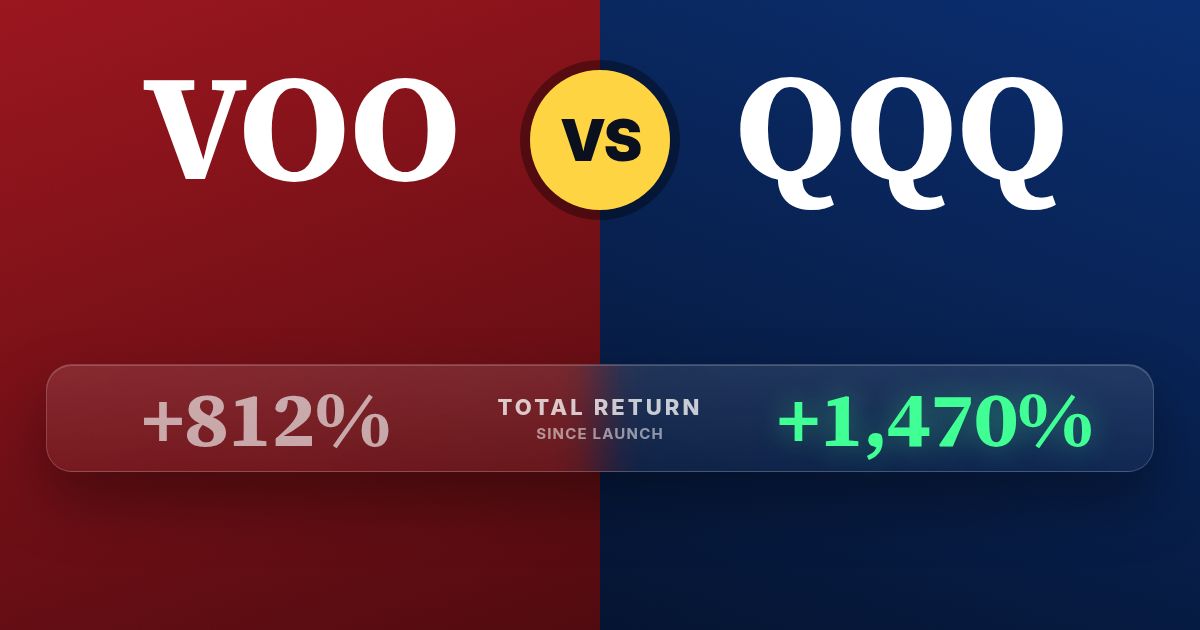
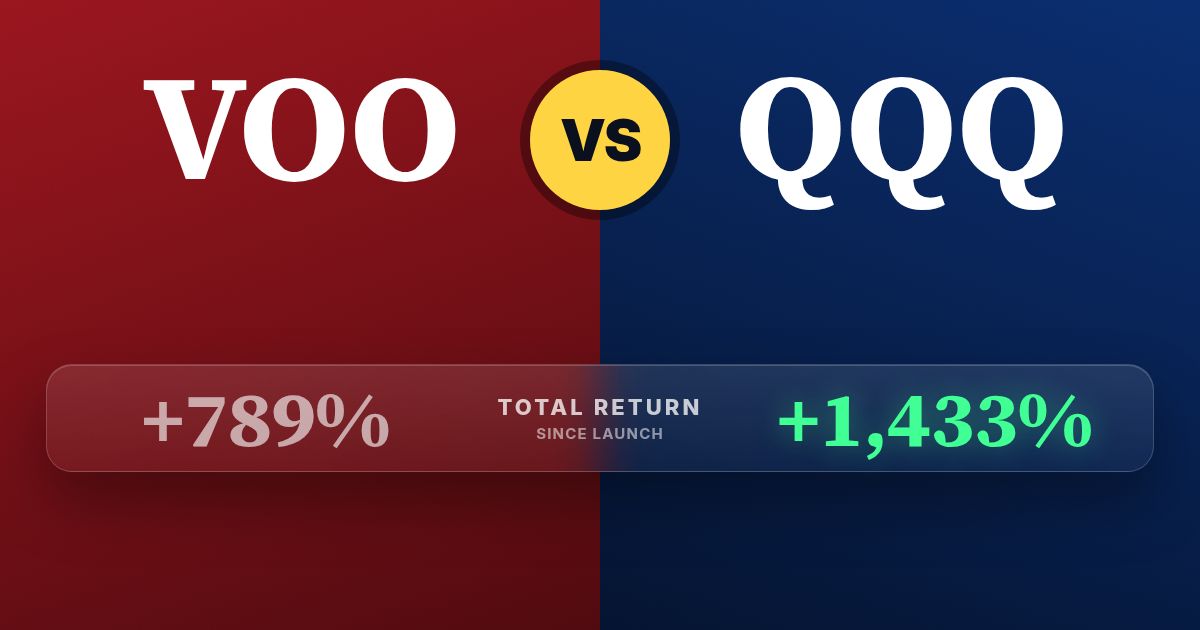
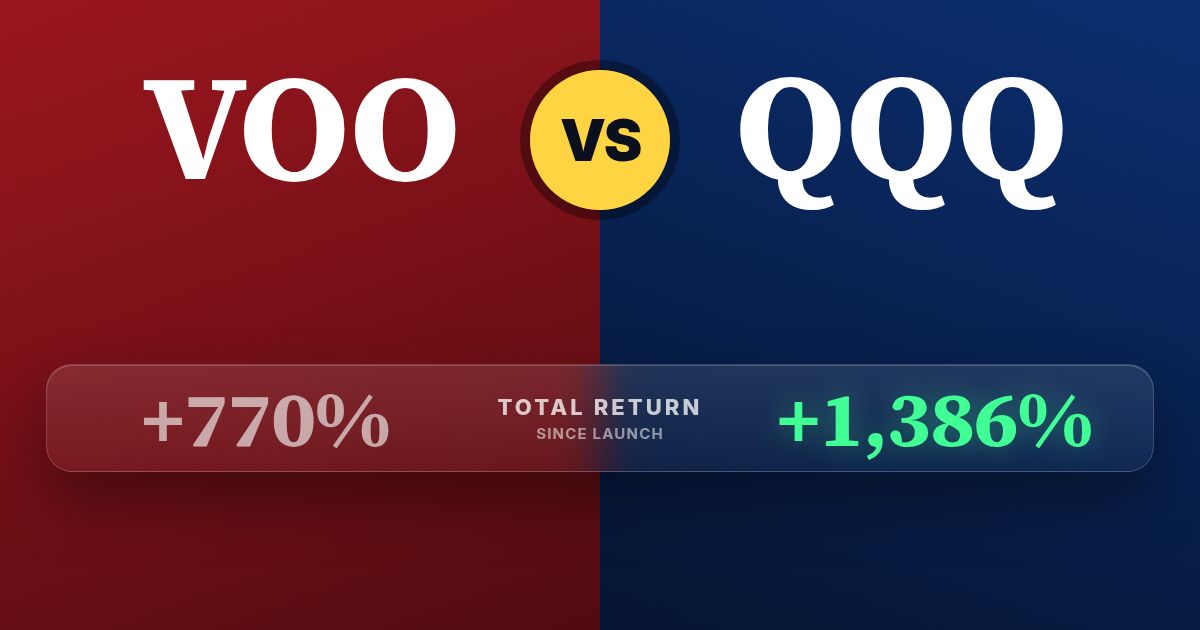
For context, since VOO launched in 2010, its total return is 770%. That is a strong run, but note that it started after the 2008 to 2009 bottom. Funds that launched at different times have very different since-inception numbers, so never compare them without checking the start date.
Sequence of returns: why the order of gains and losses matters
If you are only adding money, a crash is often a sale on future shares. If you are taking money out, a crash early on can do lasting damage. This is called sequence of returns risk: the same average return can leave you with very different balances depending on the order of good and bad years.
Here is a hypothetical (assumptions only, not a forecast). You start with $500,000 and withdraw $20,000 at the start of each year. Over three years you get returns of -20%, +10% and +10%, either in that order or with the bad year last.
| End of | Bad year first | Bad year last |
|---|---|---|
| Year 1 | $384,000 | $528,000 |
| Year 2 | $400,400 | $558,800 |
| Year 3 | $418,440 | $431,040 |
Same three returns, same withdrawals, but about $12,600 apart after three years. And the gap keeps growing because the lower balance has less to recover with. That is why people close to retirement often hold some cash or short-term bonds, so they are not forced to sell stocks in a crash.
For example, a cash-like fund such as SGOV (a short-term Treasury ETF) currently shows a yield of 3.6%. It is not an index fund in the stock sense, and it carries its own trade-offs like reinvestment and inflation risk, but it shows how the 'safe bucket' idea works.
Other ways you can lose money in index funds
Not every 'index fund' is the same as a broad market fund. A few ways people get hurt beyond the normal market cycle:
- Narrow indexes. A fund that tracks one sector or theme can fall much further than the overall market. An index is only as diversified as what it tracks.
- Leveraged index funds. A fund like TQQQ aims for a multiple of a daily index move. It shows a total return since inception of 23,225%, but the path was extremely rough, and the structure can lose money even when the index ends up. I break that down in Leveraged ETF Decay: Why TQQQ Can Lose Money Even When QQQ Rises.
- Bond index funds. They are usually calmer than stocks, but they can fall when interest rates rise, as many saw in 2022.
- Growth-heavy funds. A tech-heavy fund like QQQ has had a big run (total return since inception of 1,386%), but it is more concentrated. Compare the trade-offs in VOO vs QQQ.
- Buying at a peak right before a long slump. It is possible, especially with a lump sum and a short horizon.
Step by step: how to manage the risk of losing money
- Write down when you need the money. Each dollar gets a date. Money needed within about five years should not depend on stock prices.
- Pick a stock/bond/cash mix you can live with. The right mix is the one you will not abandon in a 30% drop. Test yourself: how would you feel seeing $100,000 become $70,000?
- Use broad, low-cost funds as the core. A broad fund like VOO owns hundreds of companies, which removes single-stock risk.
- Build an emergency fund first. That way a job loss does not force you to sell stocks in a downturn.
- Invest regularly. Putting in money every month means you buy more shares when prices are low. It does not prevent losses, but it makes crashes less painful if you are still adding.
- Rebalance on a schedule. Once or twice a year, bring your mix back to your target. It forces you to trim what has run up and add to what has fallen.
- Decide in advance what you will do in a crash. Write it down. 'I will keep investing and not check my account daily' is a perfectly good plan.
If you are thinking about a large sum, How to Invest $100,000 for 10 Years walks through lump sum, dollar-cost averaging and mixes.
Common mistakes
- Assuming 'diversified' means 'safe.' It means safer than one stock, not safe from a market-wide drop.
- Judging a fund by a short track record. A fund that launched after a crash will look great. Always check the launch date.
- Selling after a big drop. It converts a temporary decline into a permanent loss, and recoveries often start before the news improves.
- Investing money you need soon. A house down payment due in two years should not ride the stock market.
- Chasing leveraged or concentrated funds for faster gains. More upside usually comes with a much bigger downside.
- Ignoring withdrawals. If you are drawing income, the order of returns matters much more than the average.
Edge cases worth knowing
Account type. In a retirement account like an IRA or 401(k), a loss is not taxed, but you also generally cannot use it to offset gains. In a taxable account, realized losses can sometimes offset gains. Tax rules are specific and change, so check with a tax professional about your situation.
Fund versus index. The fund can trail the index slightly because of fees. For a low-cost fund this gap is tiny, but it is never zero.
Dividends. Dividends soften losses a bit and speed up recoveries when reinvested, but they do not stop a crash. If you want to see how the income side works, the sister sites cover that, like TopDividendETFs.com.
Quick checklist
- I know when I will need each chunk of money.
- Money needed within about five years is not in stocks.
- I have an emergency fund separate from my investments.
- My core holdings are broad and low cost.
- I have a written plan for what to do in a 30% to 50% drop.
- I check launch dates before trusting any since-inception return.
To see how different funds compare on fees and results since launch, try the ETF screener or the calculators. For growth-focused options, see GrowthETFs.com.
FAQ
Can you lose all your money in an index fund?
For a broad index fund holding hundreds of companies, losing everything would require essentially the entire market going to zero, which has never happened to the U.S. market. Big losses are possible though. Narrow or leveraged funds carry much higher risk.
Are index funds safer than individual stocks?
Generally yes, because one company failing barely moves a broad fund. But they still fall when the whole market falls, so they are safer from company risk, not market risk.
How long does it take an index fund to recover from a crash?
It varies a lot. After the 2020 crash the recovery took months. After the 2000 and 2007 peaks, it took roughly seven and six years respectively to regain old price highs. Past recoveries do not guarantee future ones.
Is it a bad time to invest in an index fund if the market just dropped?
Nobody can reliably call a bottom. Investing a fixed amount on a schedule avoids having to guess, and prices being lower means each dollar buys more shares. That is not a buy signal, just how the math works.
Do index funds lose money every year?
No. Broad stock index funds have had many more up years than down years historically, but down years do happen and can be severe.
What is safer than an index fund?
Cash, money market funds and short-term Treasury funds have much smaller price swings. The trade-off is lower long-term growth and exposure to inflation.
Benjie's bottom line
Yes, you can lose money in index funds, and sometimes it is a lot. Drops of 30% to 50% have happened more than once, and recoveries have taken anywhere from months to many years.
What has historically worked in your favor is time, diversification, low costs and not being forced to sell at the worst moment. Match your stock exposure to when you will actually need the money, keep a cash cushion, and pick a plan you can stick to. This isn't a buy or sell signal, and everyone's situation is different, so do your own due diligence and talk to a tax or financial professional where it matters.
ETFs in this story
How this article was made: Benjie picks every topic based on what he finds useful as a dividend investor and what readers ask about. Parts of this article were drafted with help from AI tools, then edited, fact-checked and shaped by Benjie. All fund numbers come from the TopETFs database and update daily.
Disclaimer: TopETFs.com is published by Dividend Empire LLC for educational and entertainment purposes only. We are not financial advisors, and nothing on this site is financial advice, a recommendation, or a solicitation to buy or sell any security. ETF data is compiled from public sources and fund issuers, may be delayed, inaccurate or outdated, and may differ from the fund sponsor's own figures. Yields are trailing distribution yields, are not guaranteed, and distributions may include return of capital, which reduces your cost basis and is not a measure of performance. Total returns are since each fund's inception unless noted and are not comparable across funds with different start dates. Past performance does not guarantee future results. Investing carries risk, including loss of principal. Read each fund's prospectus and consult a licensed financial advisor before investing. Dividend Empire LLC receives compensation from ETF issuers for sponsored placements, which are labeled as such.