How Much Can You Safely Withdraw in Retirement? The 4 Percent Rule, Worked
How much can you safely withdraw from your retirement portfolio? The 4 percent rule in plain English, a $750,000 example, and when to use less.
The short version
- The 4 percent rule says you can withdraw four percent of your portfolio in year one of retirement, then raise that dollar amount with inflation each year. On $750,000, that is $30,000 in year one, or $2,500 a month.
- It is a historical guideline for a roughly 30 year retirement, not a guarantee. Retiring early, holding few stocks, or paying high fees are all reasons to use less.
- Flexibility matters more than the exact number. Being willing to skip an inflation raise or trim spending after a bad year does a lot to protect you from bad timing.
A common answer to "how much can you safely withdraw from your retirement portfolio" is four percent of your starting balance in the first year, adjusted for inflation after that. On a $750,000 portfolio, that means $30,000 in year one. It is a solid starting point, but not a promise, and below I show exactly how it works, where it breaks, and how to adjust it.
Where the 4 percent rule actually came from
The rule comes from research by financial planner Bill Bengen in the 1990s. He looked at historical U.S. market data and asked a simple question: what is the highest percentage a retiree could withdraw in year one, raise with inflation every year, and still not run out of money over 30 years?
The answer, even for people who retired right before the worst stretches in market history, was about four percent. A later study often called the Trinity Study reached similar conclusions for portfolios mixing stocks and bonds.
Here's the thing people miss. The four percent figure is the worst-case historical result for a 30 year window, not an average. In most historical periods, retirees ended up with plenty left over. But the future does not have to look like the past, which is why I treat it as a starting point and not a law.
How the rule works in plain English
There are only three moving parts.
- Year one: multiply your portfolio value on the day you retire by 0.04. That is your first year of withdrawals.
- Every year after: take last year's dollar amount and raise it by the inflation rate. You do not recalculate four percent of the new balance each year (that is a different, more flexible method).
- Time horizon: the research assumed about 30 years, with a meaningful share of the portfolio in stocks.
The idea is that your spending power stays level. You get the same lifestyle in year 20 that you had in year one, even as prices rise.
Worked example: $750,000 portfolio
Let's say you retire with $750,000. Year one is four percent of that: $30,000, or $2,500 a month before taxes. Now I'll assume inflation runs three percent a year. This is a hypothetical assumption, not a forecast.
| Year | Inflation adjusted withdrawal | Per month |
|---|---|---|
| 1 | $30,000 | $2,500 |
| 2 | $30,900 | $2,575 |
| 3 | $31,827 | $2,652 |
| 5 | $33,765 | $2,814 |
| 10 | $39,143 | $3,262 |
| 20 | $52,605 | $4,384 |
Notice that the dollar amount climbs by roughly three quarters over 20 years. That is the part people forget. Your portfolio has to keep growing enough to fund a bigger paycheck each year, which is why a retirement portfolio still needs real growth assets.
Do you need to live off dividends only?
No, and this trips up a lot of income investors. The 4 percent rule is about total return, not yield. Your $30,000 can come from dividends, interest, and selling a little of the portfolio.
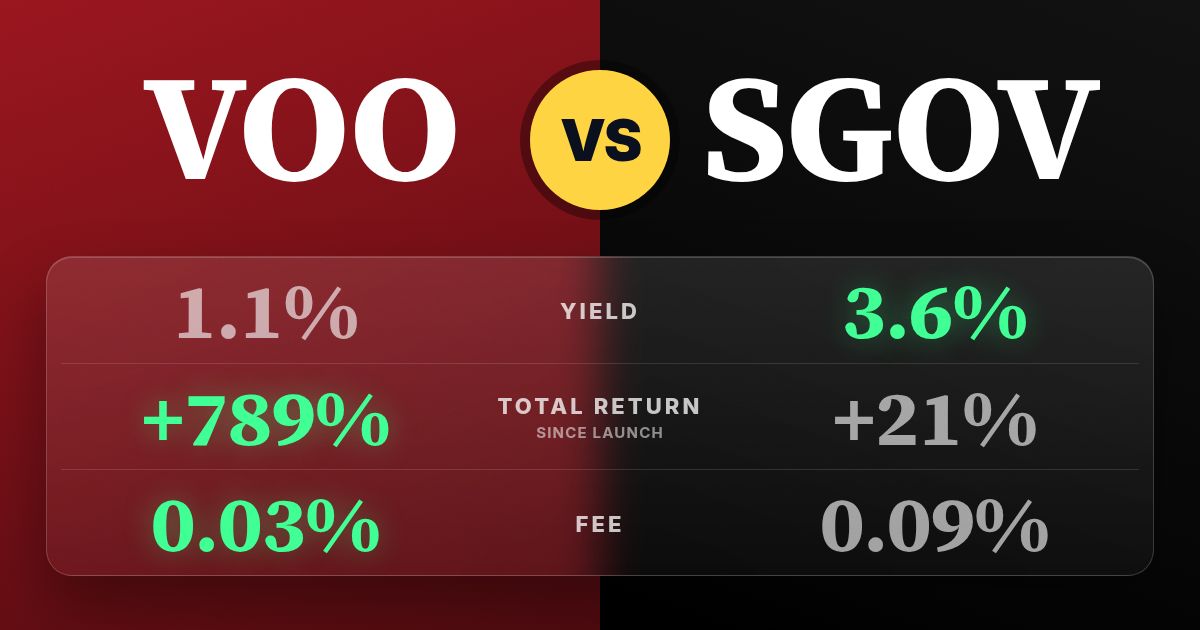
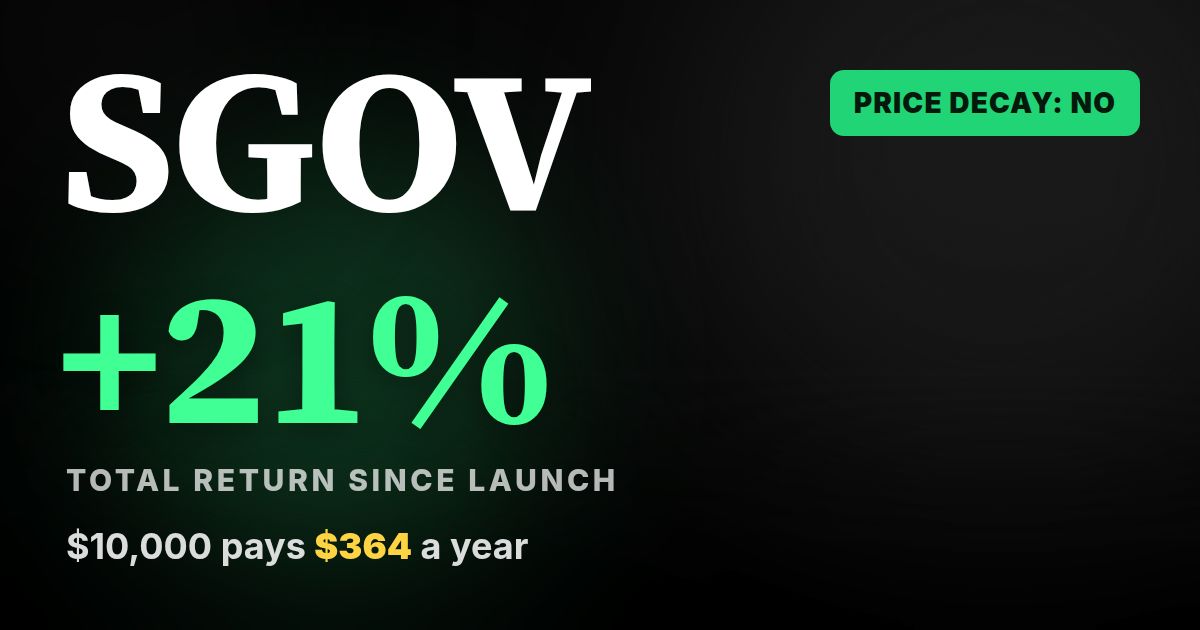
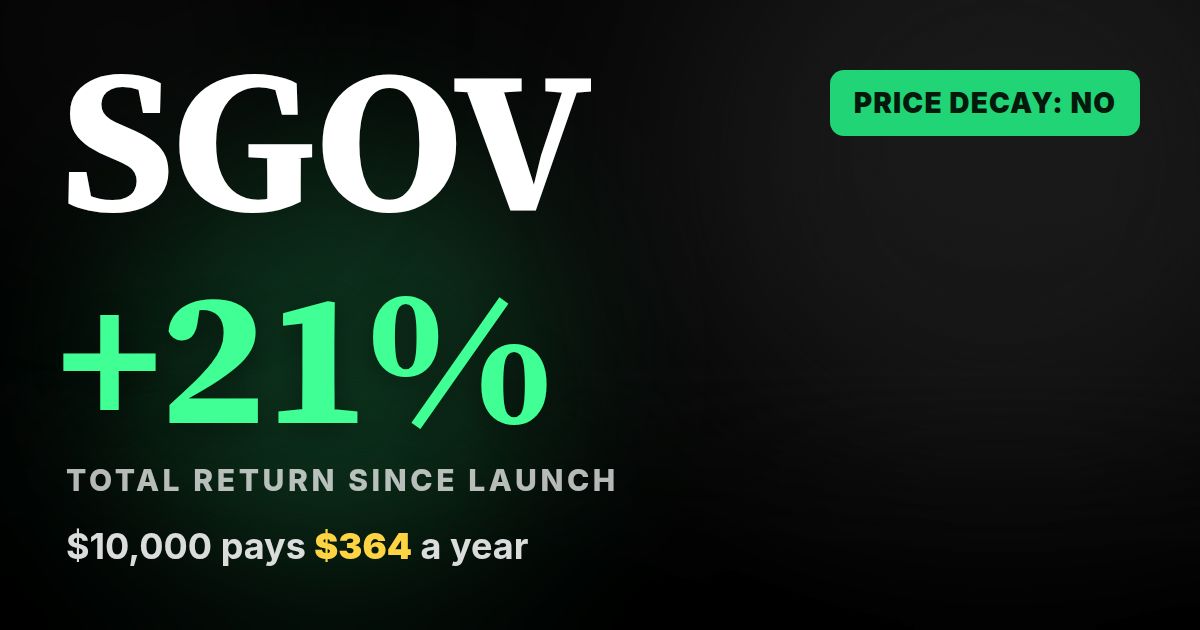
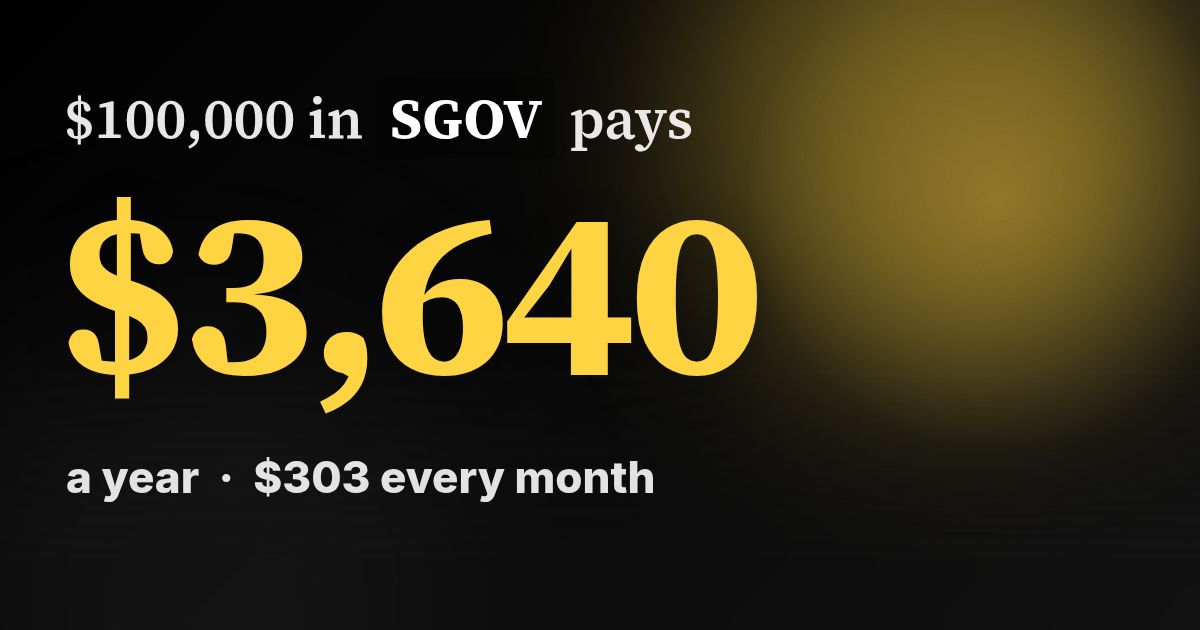
For example, VOO yields 1.1% right now, and SCHD yields 3.0%. A short term Treasury fund like SGOV yields 3.6%. A portfolio mixing these would throw off some income, and you would sell shares to cover the gap. Those are only examples of fund types, not recommendations.
Some people prefer a dividend-focused approach because it feels more comfortable to spend income than to sell shares. That is a valid personal choice. Just remember a high yield does not make a withdrawal safer if the share price is falling, so always check total return too. If you want to see how a bigger income target translates into a portfolio size, my guide on how much you need in SCHD to make $1,000 a month shows the math.
Sequence risk: why the first few years matter most
Sequence of returns risk means the order of good and bad years matters when you are withdrawing money. A bad market early in retirement hurts more than the same bad market later, because you are selling shares at low prices and those shares cannot recover.
Here's a simple three year illustration. Both retirees start with $750,000 and withdraw $30,000 at the start of each year (no inflation, to keep it clean). Both see the same three annual returns: a 15 point drop in one year, a five point gain in another, and a 15 point gain in the third. Only the order differs. These are hypothetical numbers.
| Scenario | End yr 1 | End yr 2 | End yr 3 |
|---|---|---|---|
| Down 15, up 5, up 15 | $612,000 | $611,100 | $668,265 |
| Up 15, up 5, down 15 | $828,000 | $837,900 | $686,715 |
The average return is identical, yet the retiree with the early loss is about $18,000 behind after three years, and that gap keeps compounding. This is why the first five to ten years are the danger zone.
Common ways to soften sequence risk:
- Keep one to two years of spending in cash or short term Treasuries so you do not have to sell stocks after a drop. My 3-bucket retirement strategy walks through this setup.
- Be willing to cut spending a bit after a bad year.
- Have some flexible income, like part time work or delaying a big purchase.
Flexible withdrawal tweaks that help
A fixed inflation adjusted paycheck is rigid. Real people adjust. Here are a few well-known flexible approaches:
- Skip the raise after a down year. If your portfolio fell, keep last year's dollar amount instead of adding inflation. Simple and effective.
- Guardrails. Pick an upper and lower limit for your withdrawal rate, for example three and a half percent and five percent. If a market drop pushes you above the upper limit, cut spending by a set amount, like one tenth. If markets surge and you fall below the lower limit, give yourself a raise.
- Percent of current balance. Withdraw a fixed share of whatever the portfolio is worth each year. It can never hit zero, but your income will bounce around.
Quick example with guardrails: you start at $30,000 on $750,000. After a rough market your portfolio drops to $600,000. Now $30,000 is a five percent withdrawal rate. Cutting spending by one tenth brings you to $27,000, which is four and a half percent of $600,000. It stings, but it keeps the plan on track.
When to use less than the standard rate
I would lean toward a lower starting rate, often in the range of three to three and a half percent, in these situations:
- Retiring early. If you need money for 40 or 50 years instead of 30, the plan has to stretch further.
- Very conservative portfolio. The research assumed a meaningful stock allocation. A portfolio mostly in cash and short bonds may not keep up with inflation.
- High costs. Fees come straight out of your safe withdrawal rate. A one percent advisory fee (an assumption for illustration) eats a quarter of a four percent withdrawal. Compare that with a broad index fund like VOO at a 0.03% expense ratio. Costs matter a lot over 30 years.
- No flexibility. If your spending is locked in and you cannot cut anything, you need more cushion.
- Legacy goals. If you want to leave a large inheritance, a lower rate leaves more behind.
On the flip side, if you will get Social Security or a pension that covers a big chunk of your spending, your portfolio only has to cover the gap, and a higher rate or a later start may be reasonable.
Step by step: setting your own withdrawal rate
- Estimate your yearly spending. Add up essentials (housing, food, health care, insurance) and extras (travel, gifts).
- Subtract guaranteed income. Social Security, pensions and annuities reduce what the portfolio must cover.
- Divide the gap by your portfolio value. That is your withdrawal rate. $30,000 divided by $750,000 is 0.04, or four percent.
- Compare to your situation. Retiring at 65 with some flexibility, four percent is a reasonable reference point. Retiring at 50, start lower.
- Plan for taxes. Withdrawals from pre-tax accounts like a traditional IRA or 401(k) are generally taxed as ordinary income, while Roth withdrawals follow different rules. Your take-home may be less than $30,000, so confirm the current rules or check with a tax professional.
- Set a yearly review. Check your balance and spending each year and apply your guardrails.
Common mistakes
- Treating it as guaranteed. It is a historical guideline with a specific time horizon and assumptions.
- Recalculating four percent of the new balance every year and thinking you are following the original rule. They are different methods.
- Chasing yield to avoid selling. Very high yield funds can lose share price over time. I always check total return and price decay first. See how covered call ETFs generate their big yields to understand the trade-offs.
- Ignoring taxes and fees. A four percent pre-tax withdrawal is not four percent in your pocket.
- Holding too little in stocks. Inflation quietly erodes a portfolio that does not grow.
- Not having a cash buffer. Forced selling in a downturn is how sequence risk bites.
FAQ
Is the 4 percent rule still safe?
It has held up historically for 30 year periods, but nobody knows future returns. Many planners suggest treating it as a starting point and staying flexible, or starting a bit lower if you retire early.
Is it taken from the starting balance or the current balance?
In the original rule, it is based on the starting balance in year one, then that dollar amount is raised for inflation each year. Taking a percentage of the current balance is a different, more flexible approach.
Is the withdrawal before or after taxes?
Before. If you withdraw from pre-tax accounts, you will owe income tax on that money, so plan for a smaller take-home amount. Check current tax rules or ask a tax professional.
Can I live on dividends alone with $750,000?
It depends on the yield. A portfolio yielding roughly three to four percent might produce about that much in income, but chasing yield can raise risk. Total return, not just yield, is what keeps the portfolio healthy.
What withdrawal rate is safe if I retire at 55?
With a longer horizon of 35 to 40 years, many people start closer to three to three and a half percent and stay flexible. Use a calculator and test a few scenarios.
Does the 4 percent rule work with ETFs?
Yes, the rule is about asset allocation and total return, not a specific product. Low-cost diversified ETFs are a common way to hold the stock and bond mix the research assumed.
My bottom line
Four percent is a useful rule of thumb, not a magic number. On $750,000 it gives you about $30,000 in year one and a rising paycheck after that, but the real protection comes from flexibility, low costs, a cash buffer for the early years and a willingness to adjust.
If you want to play with the numbers, try the TopETFs calculators or project future income at DividendProjection.com. This isn't a buy or sell signal, and it is not personal advice. Do your own due diligence and run your plan by a qualified professional before you rely on it.
ETFs in this story
How this article was made: Benjie picks every topic based on what he finds useful as a dividend investor and what readers ask about. Parts of this article were drafted with help from AI tools, then edited, fact-checked and shaped by Benjie. All fund numbers come from the TopETFs database and update daily.
Disclaimer: TopETFs.com is published by Dividend Empire LLC for educational and entertainment purposes only. We are not financial advisors, and nothing on this site is financial advice, a recommendation, or a solicitation to buy or sell any security. ETF data is compiled from public sources and fund issuers, may be delayed, inaccurate or outdated, and may differ from the fund sponsor's own figures. Yields are trailing distribution yields, are not guaranteed, and distributions may include return of capital, which reduces your cost basis and is not a measure of performance. Total returns are since each fund's inception unless noted and are not comparable across funds with different start dates. Past performance does not guarantee future results. Investing carries risk, including loss of principal. Read each fund's prospectus and consult a licensed financial advisor before investing. Dividend Empire LLC receives compensation from ETF issuers for sponsored placements, which are labeled as such.