How Do You Get Paid Dividends? Where the Money Actually Goes
How dividends get paid: when the cash hits your account, reinvest vs. cash, moving it to your bank, IRAs, and why a dividend you expected never showed up.
The short version
- Dividends are paid automatically. On the pay date, the cash lands in your brokerage account (or in the IRA where you hold the fund). You don't have to claim anything or fill out a form.
- You choose what happens next: keep the dividend as cash, or have your broker reinvest it into more shares (a DRIP). Most brokers let you set this for your whole account or fund by fund.
- Dividends don't go straight to your bank account. To spend them, you transfer the cash out, and many brokers let you set that up as an automatic monthly transfer.
You get paid dividends automatically. If you own a stock or ETF before its ex-dividend date, your broker credits the dividend to your account on the payment date as cash, or as new shares if you turned on dividend reinvestment. From there the money is yours to reinvest, leave as cash, or transfer to your bank.
That's the whole answer in two sentences. But when you're new, the real questions come right after: where exactly does the money show up, why does it say "pending," how do I get it into my checking account, and why didn't I get the dividend I was expecting? I've been collecting dividends for over ten years, and I still remember checking my account on the first pay date wondering if I'd done something wrong. This guide walks through all of it, step by step.

How a dividend travels from the fund to your account
Here's the path, in plain English. A company earns money and its board declares a dividend. An ETF like SCHD collects the dividends from all the companies it holds, takes out its small fee, and passes the rest on to shareholders as its own distribution. On the payment date, that cash moves through the market's clearing system to your broker, and your broker credits your account.
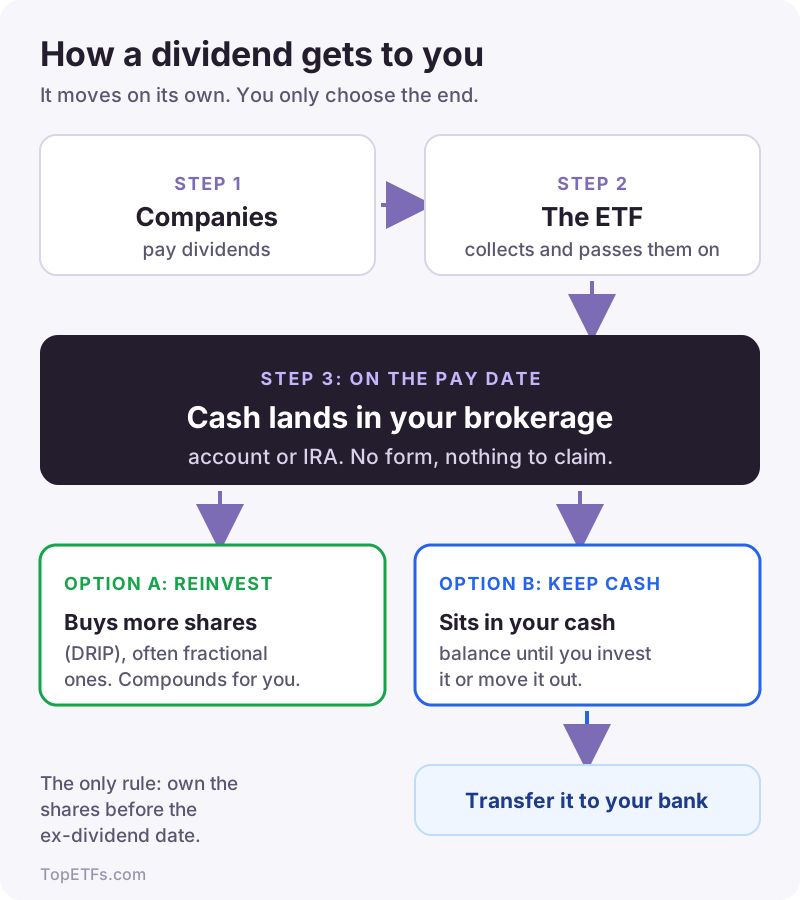
Two things make this simple for you. First, you don't need to do anything to receive a dividend. Owning the shares at the right time is enough. Second, your broker does the bookkeeping. You'll see the payment in your account activity and, if it's a taxable account, on a tax form at the end of the year.
The dates that decide whether you get paid
Every dividend comes with a few dates. You only need to understand one of them to know if you'll get paid, but here are all of them so the terms on your broker's screen make sense:
- Declaration date: the day the company or fund announces the dividend amount and its dates.
- Ex-dividend date: the key one. You must own the shares before this date. Buy on the ex-date or later and the next dividend goes to the seller instead.
- Record date: the day the fund checks its list of shareholders. Since US trades started settling in one business day in May 2024, the ex-date and record date are usually the same day.
- Payment date: the day the cash actually arrives. It can be a few days to a few weeks after the ex-date, depending on the fund.
A simple rule of thumb: buy by the close of the trading day before the ex-dividend date. And here's the part that surprises people: you can sell on the ex-date itself and still receive the dividend, because you owned the shares going into it. If you want the deeper version of how the dates and the price drop work, my guide on how ETF dividends work covers it.
Where the money shows up in your brokerage account
This is where beginners get confused, because every broker labels it a little differently. Here's what to look for.
Your cash or "core" position
If you take dividends as cash, they land in your account's cash balance. Some brokers call this the core position, settlement fund or cash sweep. At many brokers that cash is automatically swept into a bank deposit or money market fund where it can earn some interest while it sits. How much depends entirely on your broker, so it's worth checking.
Your activity or transaction history
Every dividend shows up as its own line in your account history. You'll typically see a few types of entries:
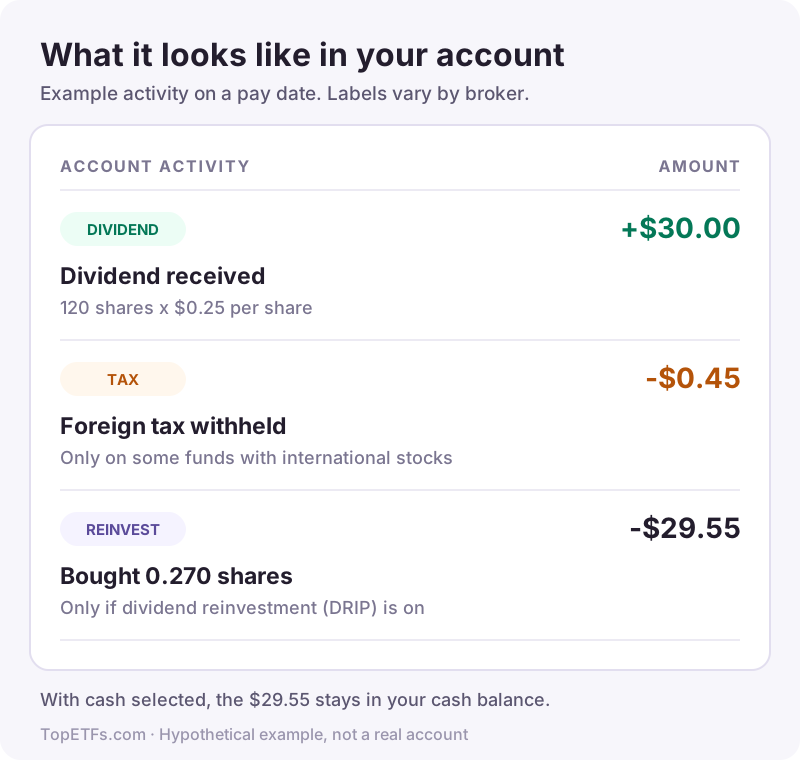
- Dividend received: the cash payment, with the ticker and amount.
- Reinvestment: if you have a DRIP on, a second line shows the dividend buying more shares, often fractional ones like 0.270 shares.
- Foreign tax withheld: funds that hold international stocks sometimes show a small withholding line. That's normal.
- Pending or expected dividend: some brokers show an upcoming dividend between the ex-date and the pay date. It's not spendable until it actually pays.
If you hold your ETFs in an IRA or Roth IRA, the same thing happens, just inside that account. The dividend stays in the IRA. It does not go to your regular brokerage account or your bank unless you take a withdrawal.
Step by step: set up how you want to get paid
Whether your dividends end up as more shares or as spending money is a setting you control. Here's how to set it up at most brokers:
- Find the dividend setting. It's usually under account settings, called something like "dividends and capital gains," "dividend reinvestment" or "DRIP."
- Choose account-wide or fund-by-fund. Most brokers let you set a default for the whole account and then override it for individual positions.
- Pick reinvest or cash. Reinvest buys more of the same fund on the pay date. Cash leaves it in your cash balance so you can spend it or invest it somewhere else.
- Check that it applies to new purchases. Some brokers apply your default to positions you buy later; others need you to set it each time.
- If you want the money in your bank, link your checking account and set up a transfer. Many brokers offer automatic recurring transfers, for example on the same day each month.
- Watch the first pay date. After your first dividend posts, look at your activity to confirm it went where you expected.
Reinvest or cash? A quick way to decide
- Still building: reinvesting puts every dollar back to work and makes compounding automatic.
- Living on the income: take cash and set up a monthly transfer to your bank.
- Rebalancing: take cash and use it to buy whatever is underweight in your portfolio instead of more of the same fund.
I go deeper on that choice, with a compounding calculator, in DRIP: reinvest or spend your dividends.
Worked example: what a real dividend payment looks like
Let's make this concrete. Say you have $20,000 in SCHD, which pays Quarterly, and $20,000 in JEPI, which pays Monthly. The $20,000 amounts are hypothetical, and the income is estimated from each fund's yield today, which will change.
| Fund | Pays | Each payment (est.) | Per year (est.) |
|---|---|---|---|
| SCHD | Quarterly | $150 | $600 |
| JEPI | Monthly | $133 | $1,600 |
Here's what would happen on a pay date:
- With cash selected: roughly $150 from SCHD appears as "dividend received" in your cash balance on the pay date. You can buy something else with it that day or transfer it to your bank.
- With reinvest selected: the same payment shows up, and right after it a reinvestment line buys a fraction of a share at that day's price. Your share count goes up slightly, and next quarter's dividend is a little bigger because of it.
The math behind any dividend is simple: the dividend per share times the number of shares you owned on the record date. If a fund pays $0.25 a share and you own 120 shares, you get $30. Funds announce the per-share amount, and your broker does the multiplication for you.
Want to see how those payments add up over 10 or 20 years? Plug your own numbers into DividendProjection.com, or try the calculators on our tools page.
Why didn't I get my dividend?
This is one of the most common questions I get. Usually nothing is wrong. Here are the reasons, roughly in order of how often I see them:
- You bought on or after the ex-dividend date. The dividend went to the person who sold you the shares. You'll get the next one.
- The payment date hasn't arrived yet. The ex-date and the pay date are different days. Check the fund's pay date.
- It was reinvested. If your DRIP is on, the cash came in and went right back out as shares. Look for a reinvestment line in your history.
- It went to a different account. If you hold the fund in an IRA, the dividend is in the IRA, not your regular brokerage account.
- You sold before the ex-date. If you sold even one day before the ex-date, you're no longer the owner of record.
- The fund simply paid less or nothing. Some funds, especially ones that pay a variable amount, change their payout every time. Growth-focused funds may pay very little or only once a year.
If none of those explain it, contact your broker with the ticker and the ex-date. They can see exactly what posted and when.
Common mistakes new dividend investors make
- Buying right before the ex-date just to "get the dividend." The fund's price usually drops by about the dividend amount on the ex-date, so you're not getting free money. In a taxable account you also owe tax on it.
- Thinking reinvested dividends aren't taxed. In a taxable account, reinvested dividends are taxed the same as cash dividends. I explain why in do you pay taxes on ETFs every year.
- Letting cash pile up by accident. If you chose cash but meant to reinvest, dividends can sit uninvested for years. Check your setting.
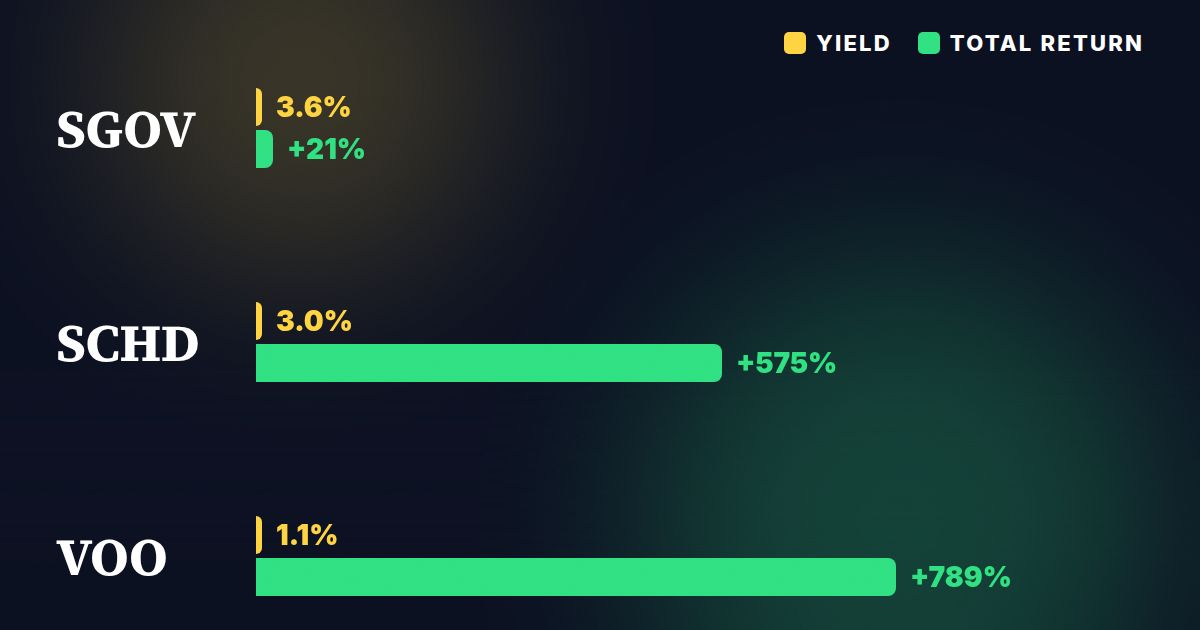
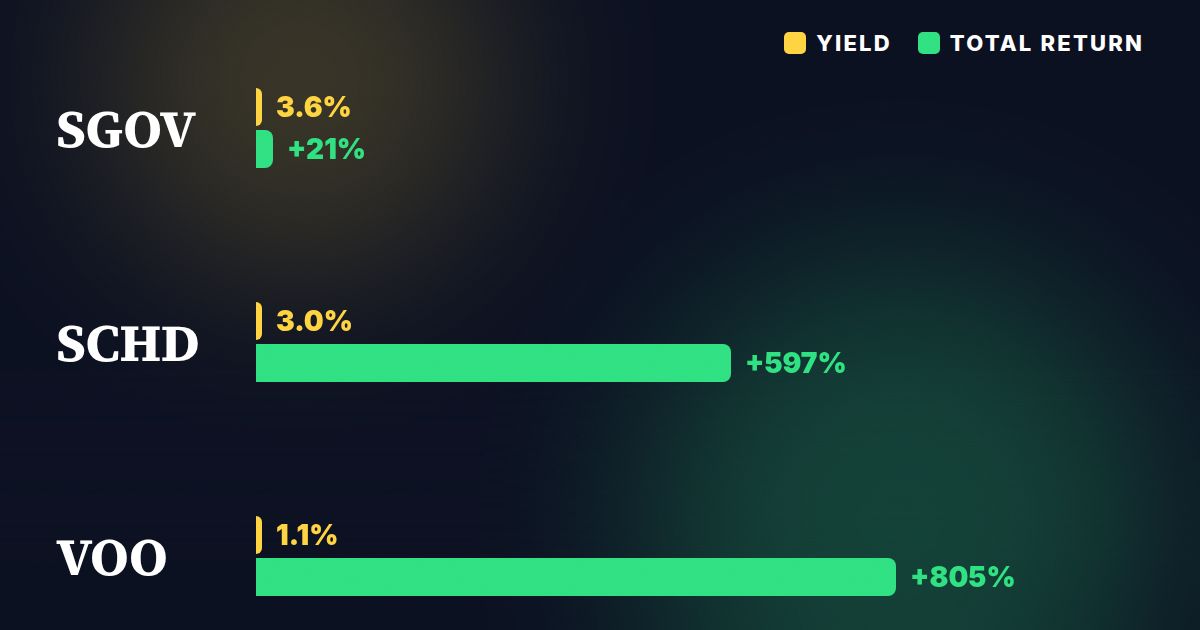
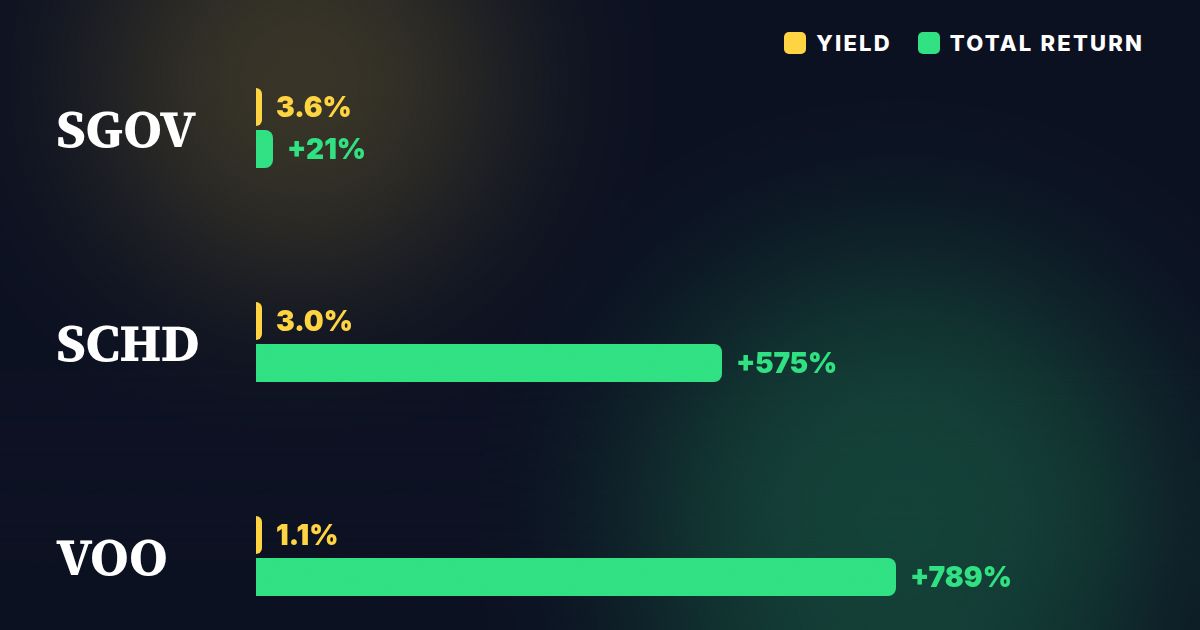
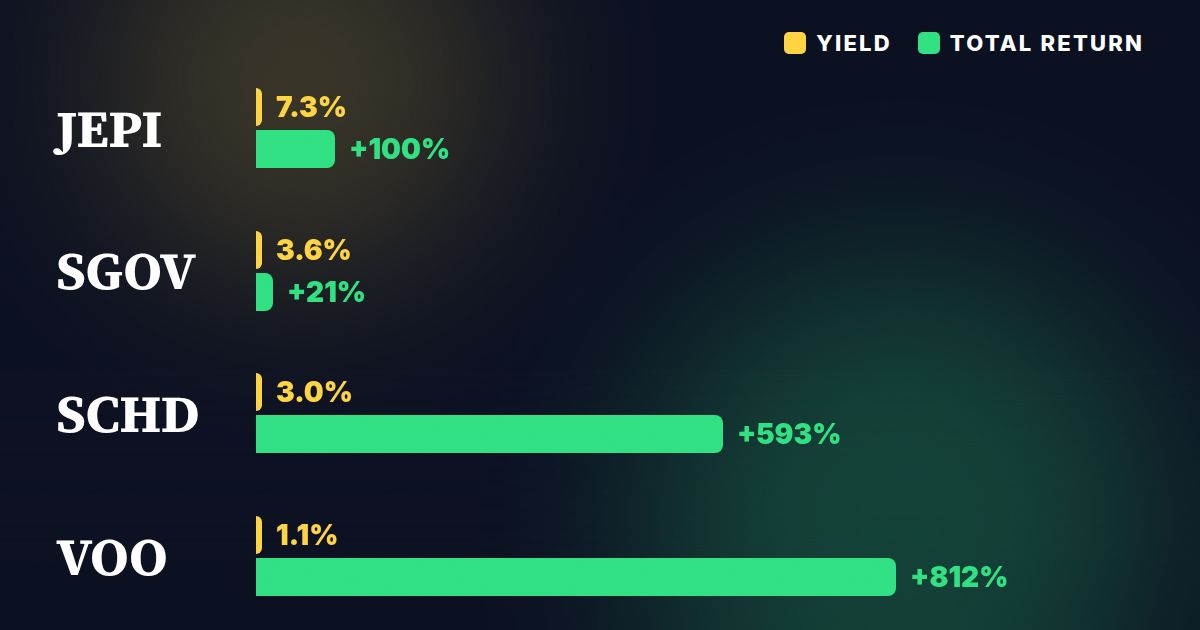
- Judging a fund by yield alone. A big payout means little if the fund's price keeps sliding. Always look at total return too. My guide on yield vs. total return shows why.
- Forgetting withdrawal rules in retirement accounts. Dividends inside an IRA are yours, but taking them out early can trigger taxes and penalties. Check the rules for your account type.
Monthly, quarterly or weekly: how often you get paid
How often you get paid depends on the fund, not on you. Broad index funds like VOO typically pay Quarterly. Many income ETFs like JEPI pay Monthly, and Treasury bill funds like SGOV pay Monthly. A newer group of funds even pays every week.
Frequency doesn't change how much you earn over a year by itself. A fund paying $120 a year pays $120 whether it comes as twelve $10 checks or four $30 checks. But if you're living on the income, more frequent payments can make budgeting easier. You can compare dividend ETFs by yield and payout frequency on TopDividendETFs.com, or filter by payout frequency in our ETF screener.
A quick checklist before your first dividend
- Confirm you'll own the shares before the ex-dividend date.
- Note the payment date so you know when to look.
- Set your dividend preference: reinvest or cash, account-wide or by fund.
- Link your bank account if you plan to spend the income, and consider an automatic monthly transfer.
- Know which account holds the fund (taxable, IRA or Roth IRA).
- After the pay date, check your activity for the "dividend received" line.
FAQ
Do dividends go directly to my bank account?
Usually not. Dividends are paid into the brokerage account that holds the shares. To get them into your bank, you transfer the cash out, and many brokers let you set up an automatic recurring transfer.
Do dividends automatically reinvest?
Only if you turn on dividend reinvestment (DRIP). Some brokers ask you to choose when you open the account, so check your settings to see whether your dividends are set to reinvest or to cash.
How long does it take to get paid a dividend?
You get paid on the payment date, which is set by the fund. It is often a few days to a few weeks after the ex-dividend date. The cash usually shows in your account that day.
Do I have to own a stock for a certain amount of time to get the dividend?
To receive the dividend, you only need to own the shares before the ex-dividend date, even if you bought the day before. Holding periods do matter for taxes, though, because a dividend usually only gets the lower qualified tax rate if you held the shares long enough.
Where do dividends go in a Roth IRA?
They stay inside the Roth IRA as cash or reinvested shares, and they can keep growing there without being taxed each year. Taking money out of a Roth IRA has its own rules, so check them before you withdraw.
Can I sell a stock right after the ex-dividend date and still get paid?
Yes. If you owned the shares going into the ex-dividend date, you get the dividend even if you sell on the ex-date or right after. Just remember the price usually drops by about the dividend amount that morning.
Benjie's bottom line
Getting paid dividends is the easy part. Own the fund before the ex-date and the money shows up on its own. The part that actually matters is what you do with it. Early on, I reinvested everything and let compounding do the heavy lifting. Once the income got big enough to matter, switching some of it to cash and setting up a monthly transfer is what made it feel like a real paycheck.
Check your dividend setting today, know which account each fund lives in, and look at your activity on the next pay date so you see it happen. And remember that how a dividend is taxed depends on your account and your situation, so check with a tax professional if you're unsure. This isn't financial advice, just how it works and what I've learned doing it.
ETFs in this story
How this article was made: Benjie picks every topic based on what he finds useful as a dividend investor and what readers ask about. Parts of this article were drafted with help from AI tools, then edited, fact-checked and shaped by Benjie. All fund numbers come from the TopETFs database and update daily.
Disclaimer: TopETFs.com is published by Dividend Empire LLC for educational and entertainment purposes only. We are not financial advisors, and nothing on this site is financial advice, a recommendation, or a solicitation to buy or sell any security. ETF data is compiled from public sources and fund issuers, may be delayed, inaccurate or outdated, and may differ from the fund sponsor's own figures. Yields are trailing distribution yields, are not guaranteed, and distributions may include return of capital, which reduces your cost basis and is not a measure of performance. Total returns are since each fund's inception unless noted and are not comparable across funds with different start dates. Past performance does not guarantee future results. Investing carries risk, including loss of principal. Read each fund's prospectus and consult a licensed financial advisor before investing. Dividend Empire LLC receives compensation from ETF issuers for sponsored placements, which are labeled as such.