Which Investments to Sell First in Retirement: Withdrawal Order
How to withdraw from your portfolio in retirement: the standard order (taxable, IRA, Roth), when to break it, and a $1M example comparing 15 years.

The short version
- The textbook order is taxable accounts first, tax-deferred accounts (traditional IRA, 401(k)) second, and Roth accounts last. It lets the most tax-advantaged money compound the longest.
- It is a starting point, not a law. Pulling some IRA money out early, while your tax bracket is low, can beat it, especially if a big IRA would otherwise create large required withdrawals later.
- In my hypothetical $1M example, the standard order paid $0 tax in year 1 but still had about $262,000 of pre-tax IRA money after 15 years. The bracket-aware order paid $2,000 in year 1 and a lower tax bill over the 15 years.
The standard way to withdraw from a retirement portfolio is to spend from your taxable brokerage account first, then your tax-deferred accounts like a traditional IRA or 401(k), and leave your Roth accounts for last. That order is a good default. But a lot of people come out ahead by bending it and taking some IRA money in the early years while their tax bracket is low. Below is how the order works, when to break it, and a $1M example that compares both approaches.
The standard order and why it exists
The logic is simple. Money in a traditional IRA or 401(k) grows tax-deferred, and money in a Roth grows tax-free. If you spend from the taxable account first, the accounts with the tax advantages keep compounding for more years.
Here is how each bucket gets taxed when you pull money out:
- Taxable brokerage account: you only owe tax on the gain portion of what you sell, usually at long-term capital gains rates if you held the shares more than a year. The rest is just you getting your cost basis (what you originally paid) back.
- Traditional IRA or 401(k): every dollar you withdraw is taxed as ordinary income. These accounts also carry required minimum distributions (RMDs), which force withdrawals starting at age 73 or 75 depending on your birth year. Confirm your own start age with the IRS or a tax professional.
- Roth IRA: qualified withdrawals are tax-free, and the original owner has no RMDs. Rules for employer Roth accounts have changed in recent years, so check yours.
A taxable sale usually costs the least tax per dollar spent, so it goes first. Roth dollars are the most valuable to keep, since they are never taxed on the way out and can be left to heirs. They go last. That is the whole standard order.
When it makes sense to break the order
The standard order treats every year the same. Your tax bracket does not. Here are the situations where I would think twice before following it blindly.
1. You have a few low-income years early in retirement
Say you retire at 65 but delay Social Security. Your taxable income might be very low for several years. Those low brackets are a use-it-or-lose-it opportunity. If you only spend from the taxable account, you leave that room empty. Then your IRA keeps growing, and later RMDs and Social Security can stack up and push you into higher brackets.
Filling the low brackets on purpose, with IRA withdrawals or Roth conversions (moving IRA money into a Roth and paying tax on it now), is the most common reason to break the order.
2. Your IRA is big compared to what you spend
RMDs are a percentage of your balance, and in the early RMD years that is a bit under 4 percent. Picture a hypothetical $1.5M IRA with other income covering your spending. An RMD of that size would be roughly $55,000 to $60,000 of forced taxable income, whether you need it or not. Starting smaller withdrawals years earlier can smooth that out. I cover the mechanics in my guide on RMDs from ETFs.
3. Your taxable account has huge gains
Selling everything in the taxable account first can trigger a large capital gains bill if the shares have grown a lot. Sometimes it is cheaper to sell a smaller slice, mix in some IRA money, and keep the rest. Also, shares held in a taxable account generally get a step-up in cost basis for heirs, while a traditional IRA does not. So the order that is best for you is not always the best for the people who inherit.
4. Your income affects other things
Higher income can make more of your Social Security taxable and can raise Medicare premiums. The exact thresholds change and depend on your situation, so I will not quote numbers. The point is that one big IRA withdrawal or conversion in a single year can have side effects beyond the bracket itself.
5. You want flexibility for a big expense
Roth money is tax-free, so it is a handy lever. If you need a one-time $40,000 for a roof or a car, pulling it from the Roth does not bump your taxable income that year. That is a good reason to hold the Roth in reserve rather than spend it early.
Step by step: how to build your withdrawal plan
- Add up what you need. Total annual spending, minus guaranteed income like Social Security or a pension. The gap is what your portfolio has to cover. To size that number, see how much you can safely withdraw.
- List each account with its type and balance. Taxable, traditional (IRA or 401(k)) and Roth. For the taxable account, note the cost basis. Your broker shows it.
- Estimate your taxable income without any portfolio withdrawals. Pensions, the taxable part of Social Security, interest and dividends.
- Find your low-bracket room. Look up the current standard deduction and bracket thresholds for your filing status. They change every year, so use this year's numbers.
- Decide how much IRA money to take. Withdraw up to the top of the bracket you are comfortable with, then fill the rest of your spending from the taxable account.
- Keep the Roth in reserve. Use it for big one-time costs, for years when you want low taxable income, or as the last bucket.
- Recheck every year. Returns, tax law and your spending will all change. A withdrawal order is a yearly decision, not a one-time setting.
Worked example: $1M across three accounts
Let me put numbers on this. Everything below is a hypothetical assumption, not a forecast and not current tax law. I simplified the tax rules so the comparison is easy to follow.
- Age 65 at the start, with $1,000,000 split into $300,000 taxable, $500,000 traditional IRA and $200,000 Roth IRA.
- Every account grows 5 percent a year. Withdrawals happen at the start of each year, and the rest grows. I ignore dividend tax drag in the taxable account.
- The taxable account has a cost basis of 70 percent, so 30 percent of every sale is gain.
- You spend $60,000 a year after tax, flat, with no inflation and no Social Security.
- Simplified taxes: a $30,000 deduction, then 10 percent on the first $20,000 of taxable income, 12 percent on taxable income from $20,000 to $90,000, and 22 percent above that. Long-term gains are taxed at 0 percent while taxable income stays under $90,000.
Order A (standard): taxable first, then IRA, then Roth.
Order B (bracket-aware): $50,000 from the IRA every year while it lasts, the rest from the taxable account, Roth left alone.
Year 1 tax
| Order | IRA | Taxable | Tax |
|---|---|---|---|
| A | $0 | $60,000 | $0 |
| B | $50,000 | $12,000 | $2,000 |
In Order A, you sell $60,000 of shares, only $18,000 of it is gain, and that falls in the 0 percent zone. Zero tax. In Order B, the $50,000 IRA withdrawal leaves $20,000 of taxable income after the deduction, and 10 percent of that is $2,000. The $12,000 taxable sale adds only $3,600 of gain, still taxed at 0 percent. So in year 1, the standard order looks better.
After 15 years
| Account | Start | Order A | Order B |
|---|---|---|---|
| Taxable | $300,000 | $0 | $263,000 |
| IRA | $500,000 | $262,000 | $0 |
| Roth | $200,000 | $416,000 | $416,000 |
| Total | $1,000,000 | $677,000 | $678,000 |
| Tax paid | n/a | $32,700 | $26,000 |
Here is what happened. In Order A, the taxable account ran dry in year 6. From year 7 on, all $60,000 had to come from the IRA. That meant about $63,640 of gross withdrawals a year, with roughly $3,637 of tax each year for nine years.
In Order B, I paid $2,000 a year for 13 years. The IRA was empty by year 14, and the last two years of spending came mostly from the taxable account at no tax under my simplified rules. The taxable account stayed large the whole time because 5 percent growth on $300,000 is more than the $12,000 I was taking out each year.
What the example does and does not tell you
The total balances are almost identical: about $677,000 versus $678,000. So this is not a story about one order making you richer. It is a story about what kind of money you are left with.
In Order A, the $262,000 left in the IRA is pre-tax. Every dollar will be taxed as ordinary income when you or your heirs take it. In Order B, the $263,000 sits in the taxable account. It has some embedded gains (about 30 percent of it under my assumption), but those are taxed at capital gains rates, and heirs may get a basis step-up.
Order B also paid about $6,700 less in total tax over the 15 years and emptied the IRA before RMDs could become a problem.
Notice something else: RMDs never forced anything in this example. Even in Order A, my IRA withdrawals of about $63,640 were well above the RMD for that balance. RMDs bite when your IRA is large relative to your spending, like the $1.5M case above. That is where early withdrawals or conversions matter most.
Also remember what I left out: inflation, Social Security, state taxes, market drops and changes in tax law. A bad market in the early years hurts more when you are also withdrawing, which is why some people pair this with a bucket strategy. Treat this example as a way to see the trade-off, not as a prediction. If you want to run your own numbers, the calculators on TopETFs are a good place to start.
Which shares to sell inside each account
The account order is only half the decision. Within an account, you also choose which holdings to sell.
- In a taxable account, shares with a high cost basis create the smallest gain. Many brokers let you pick specific lots. Selling shares that have lost value can also help, because the loss can offset gains on your tax return.
- In an IRA or Roth, there is no tax difference between lots, so use the sale to rebalance. Sell what has grown above your target mix.
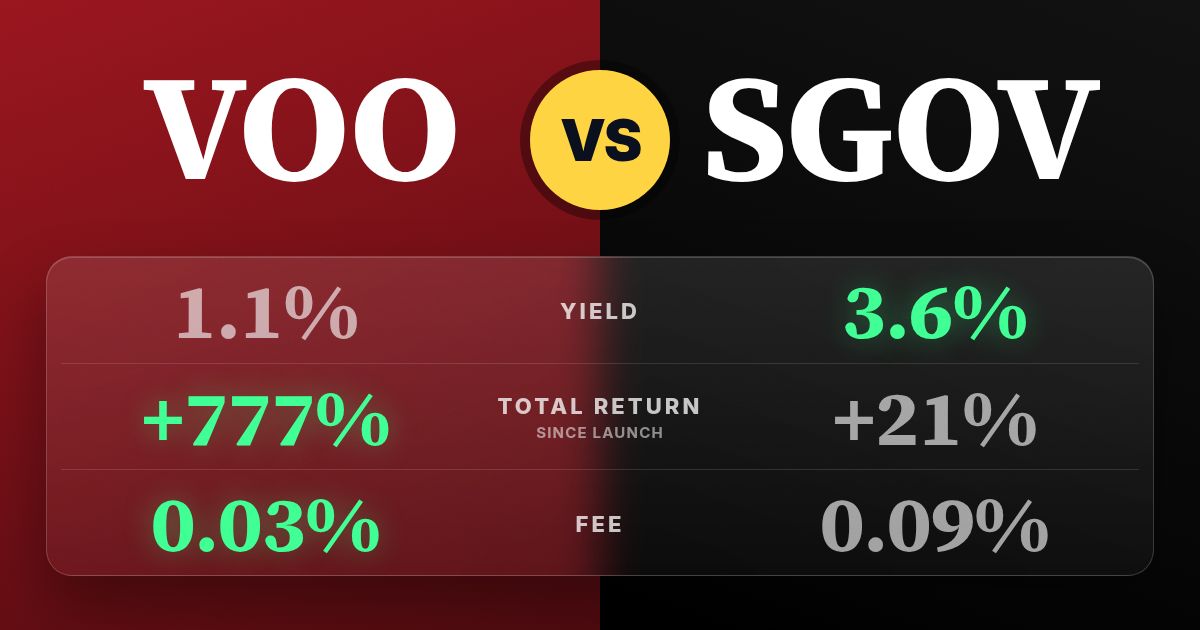
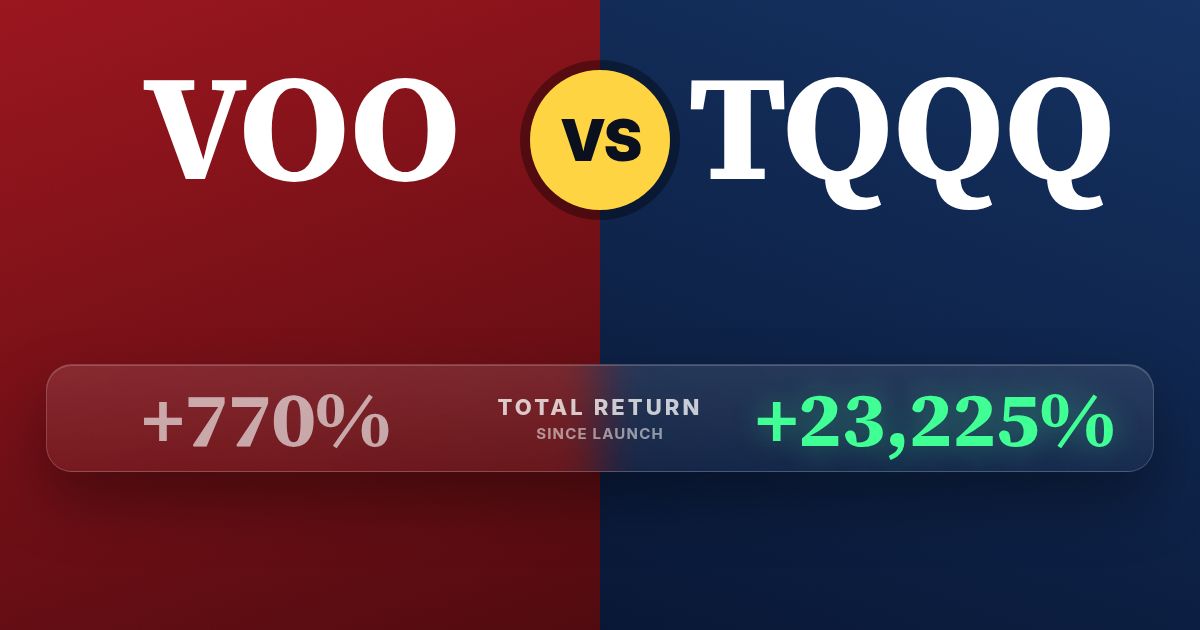
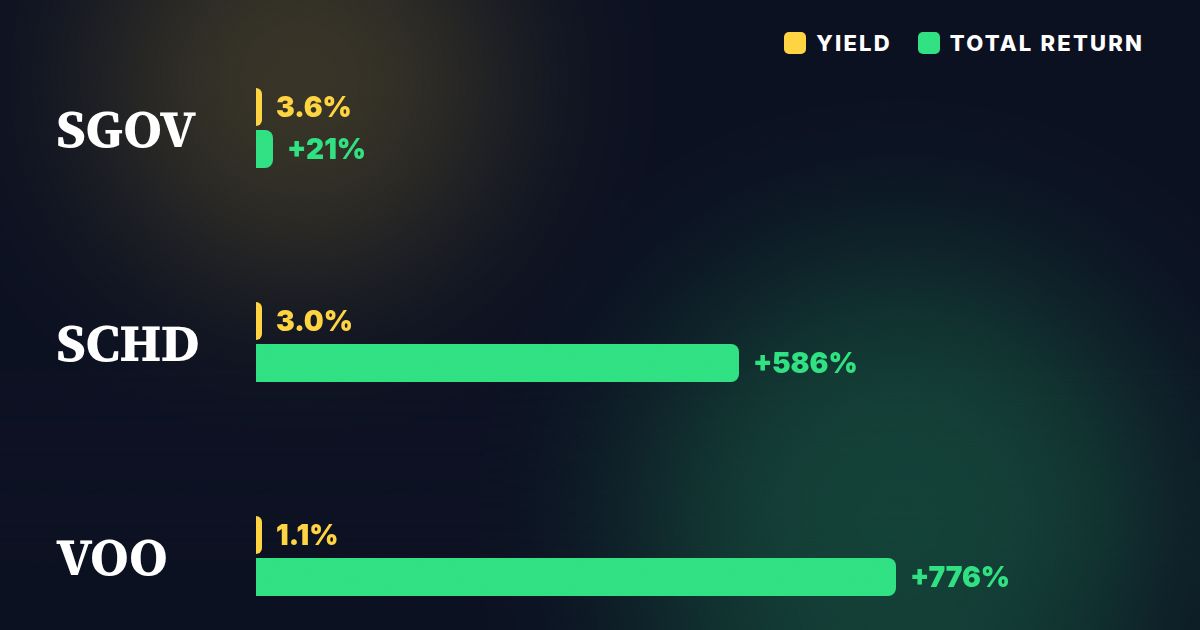
- Keep a cash buffer for the next year or two of withdrawals so you are never forced to sell stocks after a drop. A short Treasury ETF such as SGOV is a common place to hold that kind of cash, and a broad stock ETF such as VOO is a common example of a long-term holding. These are examples of how people structure it, not recommendations.
Where you hold dividend payers matters too. My guide on paying less tax on ETF dividends covers account placement.
Common mistakes
- Treating the standard order as a rule. It is a default. Your bracket, your IRA size and your heirs can all change the answer.
- Spending the Roth first. It is the most flexible and most tax-efficient bucket you own. Draining it early gives up a lot of that value.
- Ignoring the low-bracket years. If you retire before Social Security and RMDs start, those years may be the cheapest tax years of your life. Leaving the room empty is a real cost.
- Doing a huge Roth conversion in one year. A big jump in income can push you into a much higher bracket and affect Social Security taxes and Medicare premiums. Many people spread conversions over several years.
- Forgetting the RMD deadline. Missing an RMD can trigger a penalty. If you are near RMD age, build it into your plan before you start choosing other withdrawals.
- Selling stocks in a down market to fund spending. Keeping a year or two of cash set aside gives your investments time to recover.
A quick checklist
- I know my annual spending gap after guaranteed income.
- I have each account's type, balance and (for taxable) cost basis written down.
- I have checked this year's deduction and bracket thresholds for my filing status.
- I know when my RMDs start and roughly how big they will be.
- I have a cash buffer so I am not forced to sell after a market drop.
- I plan to review the order every year.
If you also want to see what a portfolio might pay in income, the dividend projection tool can help you map that out.
FAQ
Should I withdraw from my Roth or traditional IRA first?
The standard answer is traditional first, Roth last, because the Roth is tax-free and has no RMDs for the original owner. The exception is when pulling traditional money now would be taxed at a low rate compared with what you expect later.
Do I have to follow the taxable, then IRA, then Roth order?
No. It is a common default, not a rule. Many people mix accounts in the same year to manage their tax bracket, especially in low-income years before Social Security or RMDs begin.
What is a Roth conversion and when does it make sense?
It means moving money from a traditional IRA to a Roth IRA and paying ordinary income tax on the amount now. It can make sense when your current bracket is low compared with where you expect to be later. Check the current rules or ask a tax professional first.
At what age do RMDs start?
It depends on your birth year, and under current law it is age 73 or 75. Confirm the exact age and amount for your situation with the IRS or a tax professional.
Which ETF shares should I sell first in a taxable account?
Shares with the highest cost basis create the smallest taxable gain, and shares sold at a loss can offset other gains. Many brokers let you choose specific lots when you place the sale.
Benjie's bottom line
Taxable first, then tax-deferred, then Roth is a solid starting point, and for many people it is close to right. But the best order is the one that keeps your lifetime tax bill reasonable, and that often means using low-bracket years to pull from the IRA early instead of leaving a big pre-tax balance for later.
In my example, the two orders ended with nearly the same total, so the real difference was tax paid and the type of money left behind. Run the numbers for your own accounts, recheck every year, and talk to a tax professional before making big moves like conversions. This is not a buy or sell signal, and it is not tax advice. Do your own due diligence.
ETFs in this story
How this article was made: Benjie picks every topic based on what he finds useful as a dividend investor and what readers ask about. Parts of this article were drafted with help from AI tools, then edited, fact-checked and shaped by Benjie. All fund numbers come from the TopETFs database and update daily.
Disclaimer: TopETFs.com is published by Dividend Empire LLC for educational and entertainment purposes only. We are not financial advisors, and nothing on this site is financial advice, a recommendation, or a solicitation to buy or sell any security. ETF data is compiled from public sources and fund issuers, may be delayed, inaccurate or outdated, and may differ from the fund sponsor's own figures. Yields are trailing distribution yields, are not guaranteed, and distributions may include return of capital, which reduces your cost basis and is not a measure of performance. Total returns are since each fund's inception unless noted and are not comparable across funds with different start dates. Past performance does not guarantee future results. Investing carries risk, including loss of principal. Read each fund's prospectus and consult a licensed financial advisor before investing. Dividend Empire LLC receives compensation from ETF issuers for sponsored placements, which are labeled as such.