RMD From ETFs: Cash vs In-Kind, Which Shares to Sell and When
How to take a required minimum distribution from ETFs: cash vs in-kind transfer, which shares to sell first, and when to do it, with a worked example.
The short version
- You can satisfy an RMD two ways: sell ETF shares and withdraw the cash, or move shares in kind to a taxable account. Either way, the full value is taxed as ordinary income (for a traditional IRA or 401(k)).
- Inside an IRA there are no capital gains to worry about, so which shares to sell is a rebalancing decision, not a tax-lot decision.
- Do not wait for the last week of December. Pick a plan early in the year and treat the deadline as a hard one.
To take a required minimum distribution (RMD) from ETFs, you work out the dollar amount the IRS requires, then either sell enough ETF shares inside the account and withdraw the cash, or transfer shares in kind to a regular brokerage account. The tax bill is the same both ways. What changes is which investments you keep, how much cash you hold, and how much work you do.
What an RMD is, in plain English
A traditional IRA or workplace plan like a 401(k) lets your money grow tax deferred. The government does not let that go on forever. Once you reach a certain age, you must withdraw a minimum amount each year and pay income tax on it. That withdrawal is the RMD.
The starting age depends on your birth year and has changed in recent years, so confirm yours on the IRS website or with your plan. Roth IRAs do not require withdrawals from the original owner, and Roth accounts in workplace plans have also been relieved of this rule. Inherited accounts follow their own separate rules, so do not assume this guide applies to them.
The amount is generally your account balance on December 31 of the prior year, divided by a life expectancy factor from an IRS table. Your custodian usually calculates it for you and shows it in your account. Check their number against the IRS table once. It takes two minutes.
Missing an RMD or taking too little triggers a steep excise tax on the shortfall. The penalty rules have been revised and have exceptions, so look up the current version. The practical lesson is simple: do not miss it.
Cash vs in-kind: the two ways to take it
Cash distribution. You sell ETF shares inside the IRA (or use dividends and interest already sitting there as cash), then withdraw the money to your bank or a taxable account. This is the default and the simplest.
In-kind distribution. You transfer shares themselves from the IRA to a taxable brokerage account, without selling. The IRS treats the market value of the shares on the day of the transfer as your distribution. You owe ordinary income tax on that value, and the shares land in your taxable account with a cost basis equal to that value.
Here's the thing most people miss: an in-kind move does not avoid or defer the tax. It only lets you keep the same holding without selling and rebuying. You still need cash to pay the tax bill, which has to come from somewhere.
| Question | Cash | In-kind |
|---|---|---|
| Taxed as income? | Yes | Yes |
| You keep the same fund? | Only if you rebuy | Yes |
| Trading needed? | Yes, a sale | No sale |
| New cost basis? | Not applicable | Value on transfer day |
When in-kind makes sense
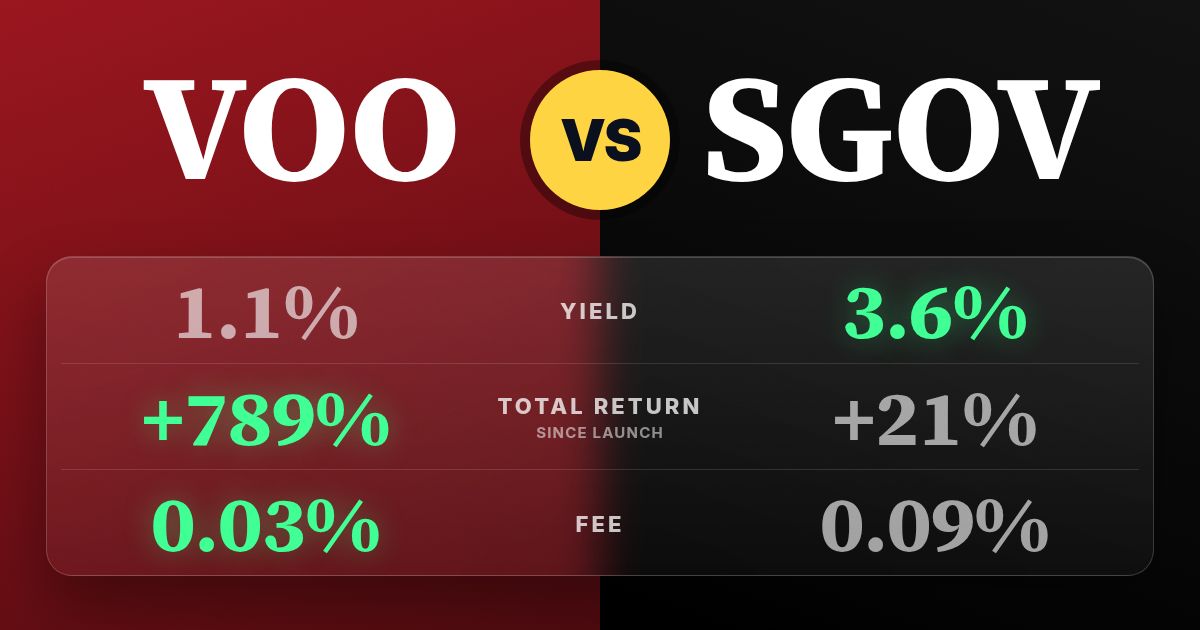
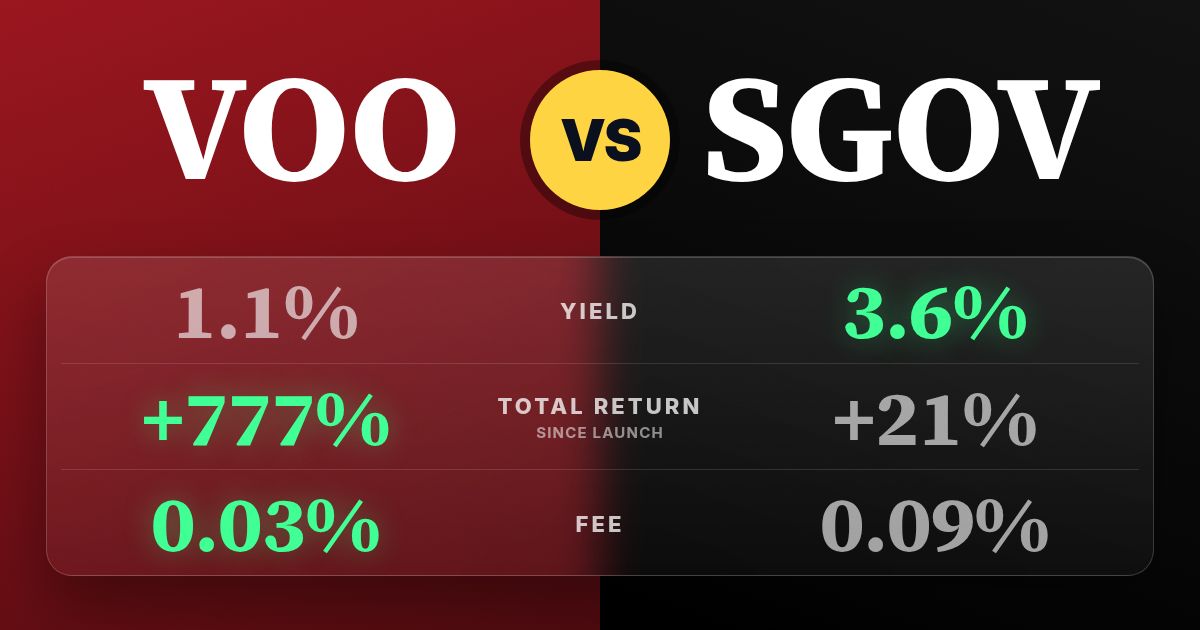
In-kind works well when you like a fund and want to keep owning it, but you need to get money out of the IRA anyway. A broad index fund like VOO (expense ratio 0.03%) is the classic example. Moving shares over means you stay invested the whole time, with no gap between selling and rebuying.
It also helps if you have no immediate need for the cash. You may not be spending the RMD. In that case, moving shares to a taxable account keeps the money working, and you simply pay the tax from other cash.
It makes less sense when you need the cash to live on. If the RMD is part of your monthly spending, a cash distribution is cleaner. Selling and withdrawing is one step, not two.
One trade-off to know: shares held in a taxable account throw off dividends and capital gains that are taxed in the year they happen. Inside the IRA, they did not. That is why in-kind can quietly raise your future tax bill. For more on that, see how to pay less tax on ETF dividends.
Which shares to sell for your RMD, step by step
Because you are inside a traditional IRA, selling a winner or loser has no capital gains effect. So you are free to choose based on what your portfolio needs. Here's the order I would think through it:
- Use cash already in the account first. Dividends and interest paid into the IRA over the year may already cover part or all of the RMD. Check your cash balance before selling anything.
- Take from your cash or short-term bucket next. If you hold a Treasury bill fund like SGOV for spending money, this is what it is for. Its expense ratio is 0.09%, and it exists to be sold when you need cash without taking much price risk.
- Sell what is overweight. If stocks ran up and now sit above your target, trim stocks. This turns the RMD into a free rebalance.
- Avoid selling what just dropped, if you can. Selling after a decline locks in the low price. If stocks are down, lean on cash and bond holdings, and let the stock side recover.
- Place the order early enough to settle. Then request the withdrawal and choose where the cash goes, plus whether to withhold taxes.
This ties directly to a bucket approach. If you want the full framework, I walked through it in the 3-bucket retirement strategy with ETFs.
A worked example with dollar amounts
Let's use made-up numbers. Everything below is a hypothetical assumption, not a prediction or advice.
Say your traditional IRA was worth $500,000 on December 31 of last year. Assume the IRS life expectancy factor for your age is 26.5. Your RMD is $500,000 divided by 26.5, or about $18,868.
Suppose the account holds $300,000 in a broad stock fund, $100,000 in a dividend fund, and $100,000 in a Treasury bill fund, and your target is 60% stocks, 20% dividend, 20% cash and bonds. Here are two ways to handle it.
| Approach | What you do | Result |
|---|---|---|
| Cash from T-bills | Sell $18,868 of the T-bill fund and withdraw it | Stocks stay put, cash bucket shrinks |
| Cash from stocks | Sell $18,868 of the stock fund and withdraw it | Trims the overweight side |
| In-kind | Transfer $18,868 of stock fund shares to taxable | Same holding, new cost basis |
Now taxes. Assume you are in a 22% federal bracket (your actual bracket and any state tax will differ). The RMD adds about $4,151 of federal tax ($18,868 times 22%). That is true for all three approaches.
In the in-kind case, you now hold $18,868 of shares in a taxable account, and you still owe the tax in cash. If you did not set aside withholding, you would need roughly $4,151 from somewhere else. That is the part people forget.
Timing: when in the year should you take it?
There is no single best date. There are three common approaches:
- Early in the year. Simple, and it gets the task done. The downside is you are selling before you know how the year will play out.
- Monthly or quarterly. You spread the withdrawals out, similar to a paycheck. This smooths out the price you sell at and fits well if you are living off the money. Some custodians set this up automatically.
- Late in the year. This lets the money stay invested longer, but it adds risk. If something goes wrong, there is no time left to fix it.
Whatever you choose, do not leave it to the final days of December. ETF trades take a day to settle, custodians have their own year-end cutoffs, and transfers can take longer than expected. A first RMD can usually be delayed until April 1 of the following year, but then you take two in one calendar year, which can push you into a higher bracket. Think hard before doing that.
Other things to know before you act
Multiple accounts. If you own several traditional IRAs, you calculate the RMD on each, but you can generally take the total from any one of them. Workplace plans like a 401(k) typically have to be handled separately, plan by plan. Confirm the rules for your account type.
Withholding. Custodians often default to withholding some federal tax on IRA withdrawals, and you can usually change the percentage. You can also make estimated tax payments instead. Pick one, so you are not surprised in April.
Charitable giving. If you give to charity, a qualified charitable distribution (QCD) from an IRA can count toward the RMD without being added to your taxable income. There are age and dollar limits that change, so check the current rules.
Dividend funds inside the IRA. Some people choose funds like SCHD (expense ratio 0.06%) so that dividends cover much of the RMD without selling shares. That can work, but a yield is not guaranteed and does not replace checking total return. See SCHD vs VOO for how those trade-offs look.
Common mistakes
- Thinking in-kind avoids the tax. It does not. Plan to pay the bill.
- Forgetting the prior year's December 31 balance. The calculation uses that date, not today's balance.
- Selling in a panic. If the market is down, it hurts to sell stocks. A cash bucket exists for exactly this.
- Waiting until the last week. A processing delay can turn into a penalty.
- Ignoring the portfolio after the withdrawal. Each RMD changes your allocation. Look at the new mix and fix it if needed.
- Skipping a tax check. The RMD can push your income higher and affect other things, including what you pay on benefits. Run the numbers.
A quick checklist
- Confirm your RMD amount using the prior year-end balance and the IRS table.
- Decide: cash, in-kind, or a mix.
- Check for cash and dividends already in the account.
- Choose which holdings to sell, starting with cash, then overweight positions.
- Set the tax withholding or plan for estimated payments.
- Place trades early enough to settle.
- Confirm the withdrawal posted and keep the records.
- Review your allocation afterward.
FAQ
Can I take my RMD in shares instead of cash?
Yes, most custodians allow an in-kind distribution of ETF shares to a taxable account. The value of the shares on the transfer date is taxed as ordinary income, just like a cash withdrawal.
Do I pay capital gains when I sell ETFs inside an IRA to fund an RMD?
No. Inside a traditional IRA, selling is not a taxable event. The tax applies when money leaves the account, and it is taxed as ordinary income.
Which ETF should I sell first for my RMD?
Many people start with cash or a short-term Treasury fund, then trim whatever is overweight compared to their target mix. It depends on your plan, and it is not a recommendation.
Can dividends count toward my RMD?
Yes. Dividends and interest paid into the IRA sit as cash, and you can withdraw that cash to satisfy the RMD. The withdrawal is what counts, so make sure it actually leaves the account.
What if I miss my RMD?
There is a significant excise tax on the amount you should have taken. The rules have exceptions and correction procedures, so contact your custodian and a tax professional right away.
Benjie's bottom line
The RMD itself is mostly a math and calendar problem. The real decision is what you sell, and that should follow your portfolio plan, not panic or the date on the calendar. Cash from your safe bucket in a down year, trim the winners in an up year, and use in-kind only when you really want to keep the holding and have cash for the tax.
This isn't a buy or sell signal, and I am not your tax advisor. Rules, ages and penalties change, so check the current IRS guidance or talk to a professional about your own situation. If you want to see what your withdrawals and income could look like over time, try the TopETFs calculators or project future income at DividendProjection. And if you are working out how much to spend overall, read how much you can safely withdraw in retirement.
ETFs in this story
How this article was made: Benjie picks every topic based on what he finds useful as a dividend investor and what readers ask about. Parts of this article were drafted with help from AI tools, then edited, fact-checked and shaped by Benjie. All fund numbers come from the TopETFs database and update daily.
Disclaimer: TopETFs.com is published by Dividend Empire LLC for educational and entertainment purposes only. We are not financial advisors, and nothing on this site is financial advice, a recommendation, or a solicitation to buy or sell any security. ETF data is compiled from public sources and fund issuers, may be delayed, inaccurate or outdated, and may differ from the fund sponsor's own figures. Yields are trailing distribution yields, are not guaranteed, and distributions may include return of capital, which reduces your cost basis and is not a measure of performance. Total returns are since each fund's inception unless noted and are not comparable across funds with different start dates. Past performance does not guarantee future results. Investing carries risk, including loss of principal. Read each fund's prospectus and consult a licensed financial advisor before investing. Dividend Empire LLC receives compensation from ETF issuers for sponsored placements, which are labeled as such.