The Three-Fund Portfolio at 30: Allocations, Funds and How to Set It Up
A three fund portfolio for a 30 year old: sample allocations, the ETFs and mutual funds to use, and a monthly contribution example you can copy.
The short version
- A three-fund portfolio is one U.S. stock index fund, one international stock index fund and one bond index fund. That is the whole thing.
- At 30, many people lean heavily toward stocks (somewhere around 8 or 9 dollars in every 10) and keep a small bond slice. The right number depends on your nerves and timeline, not a formula.
- You can build it with ETFs or with index mutual funds at Vanguard, Fidelity or Schwab. Then you feed it monthly and rebalance about once a year.
A three-fund portfolio for a 30 year old usually looks like this: roughly 6 parts in a total U.S. stock fund, 3 parts in a total international stock fund and 1 part in a total bond fund (a 60/30/10 split, out of 100). You buy the three funds, add money every month, and rebalance once in a while. It takes about an hour to set up and about an hour a year to maintain.
I like this setup because it is boring in the best way. Three funds cover thousands of companies across the world plus a bond cushion. There is nothing to pick, nothing to time and very little to go wrong. Let's walk through what each fund does, how to split the money, which versions to use, and what it looks like with real dollars.
What the three funds actually are
The idea comes from the Bogleheads community, which follows the low-cost index investing philosophy of Vanguard's founder, John Bogle. Each fund has a job.
- Total U.S. stock market fund. Owns a slice of nearly every publicly traded U.S. company, large and small. It is your main growth engine.
- Total international stock fund. Owns companies outside the U.S., in developed and emerging markets. It spreads your risk so you are not betting everything on one country.
- Total bond market fund. Owns a broad mix of U.S. investment-grade bonds. It usually swings less than stocks and gives you something to rebalance from when stocks fall.
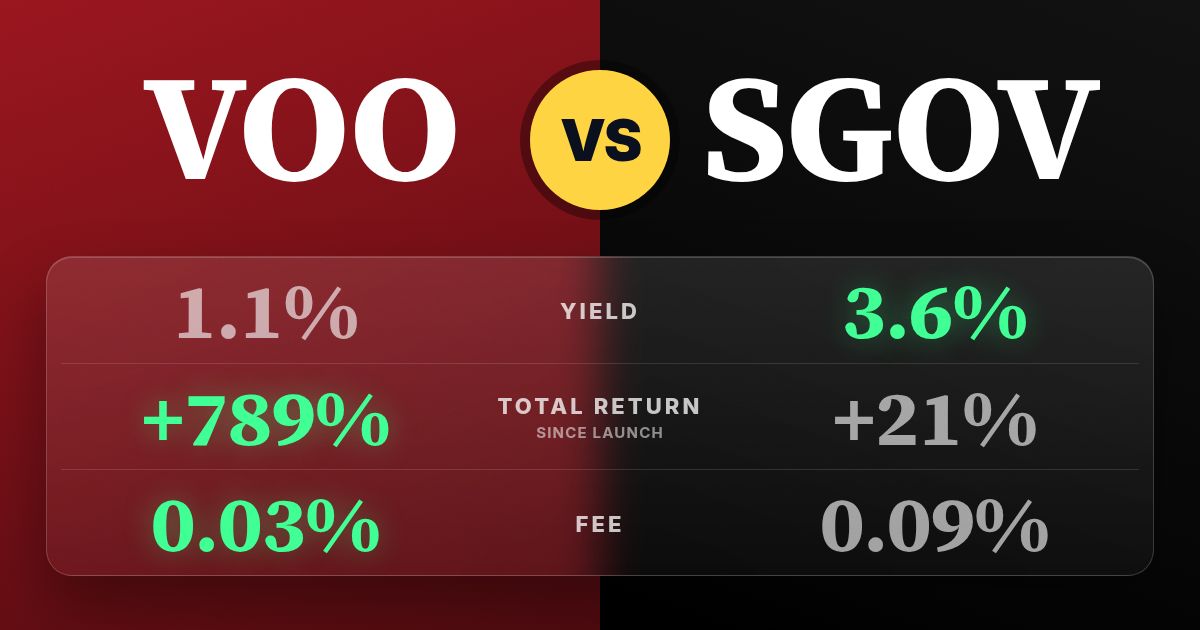
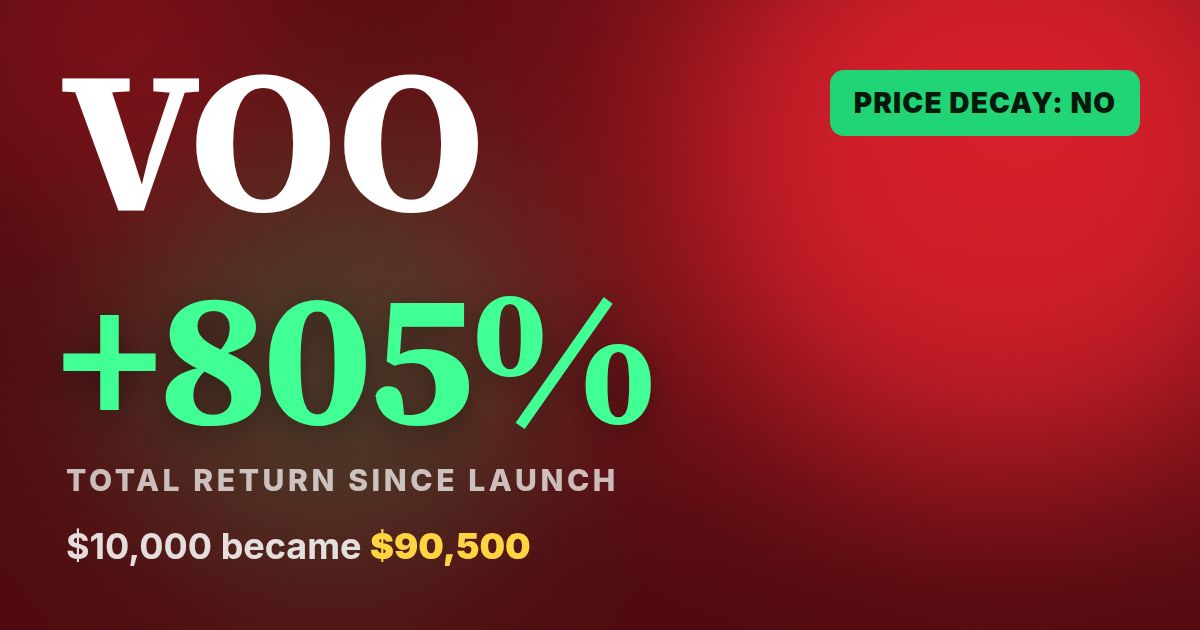
An index fund simply tracks a list of securities instead of trying to beat the market. That keeps the fee tiny. For reference, VOO (an S&P 500 fund, not a total market fund) charges 0.03% a year. Total market funds sit in the same ultra-low range. A fee that small means almost all of your return stays in your pocket.
Sample allocations for a 30 year old
There is no official answer. A classic rule of thumb says your stock share is roughly 110 or 120 minus your age, which would put a 30 year old at around 80 to 90 stocks out of every 100 dollars. Treat that as a starting point, not a law. Here are three examples, shown as parts out of 100.
| Style | U.S. | Intl | Bonds |
|---|---|---|---|
| Aggressive | 63 | 27 | 10 |
| Growth with cushion | 56 | 24 | 20 |
| Moderate | 42 | 18 | 40 |
Notice the international slice is roughly three out of every ten stock dollars in each row. People debate that number endlessly. Some go lower because U.S. companies already earn money overseas. Others go higher to match the global market. Either is defensible, so pick one and stick with it.
The honest test is this: if your portfolio fell by about a third in a year, would you keep buying? If yes, the aggressive row may fit you. If you would panic and sell, a bigger bond slice is the better portfolio, even if the math says otherwise. The best allocation is the one you can hold through a crash.
ETF or mutual fund: which version to use
Both work. The ETF and mutual fund versions of the same index are very close in cost and holdings. The differences are mostly about how you buy them.
| Broker | U.S. stocks | Intl | Bonds |
|---|---|---|---|
| Vanguard ETFs | VTI | VXUS | BND |
| Vanguard funds | VTSAX | VTIAX | VBTLX |
| Fidelity funds | FZROX | FZILX | FXNAX |
| Schwab funds | SWTSX | SWISX | SWAGX |
These are common examples, not recommendations, and I am leaving off fees on purpose. Check each fund's current expense ratio and minimum investment on the broker's site before you buy. Some mutual funds have minimums (often a few thousand dollars at some brokers, and none at others), and some are only available at their home broker.
When ETFs make more sense
ETFs trade like stocks, usually have no minimum beyond the price of one share (and many brokers sell fractional shares), and can be held at almost any broker. If you might switch brokers someday, ETFs move more easily. The trade-off is that you have to place a trade, and automatic investing is a bit less seamless at some brokers.
When mutual funds make more sense
Index mutual funds let you invest an exact dollar amount, such as $300, and set up automatic monthly purchases without thinking. That is great for a monthly contribution plan. The trade-off is that they may have minimums and can be harder to move to another broker without selling (check the broker's transfer rules first).
Taxable account? Taxes can differ between ETFs and mutual funds, so look at the fund's tax details or ask a tax professional. In an IRA or 401(k), that difference mostly disappears. I covered account-level questions in my guide on how many ETFs to own in a Roth IRA.
Step-by-step: how to set it up
- Pick your account. Most people at 30 fill a workplace 401(k) up to any match first, then a Roth or traditional IRA, then a regular taxable brokerage account. Contribution limits change yearly, so confirm the current ones.
- Choose your split. Pick a row from the table above, or write your own. Write the three numbers down.
- Pick one fund per slot. Use the ETF or mutual fund version that your broker offers at the lowest cost. In a 401(k), you may have to use whatever the plan offers, such as a total market or S&P 500 index fund plus a bond fund.
- Buy by proportion. Divide your first deposit using your target split. Fractional shares or dollar-based mutual fund purchases make this easy.
- Automate. Set a recurring deposit for the day after payday and a recurring investment into the three funds. Dividends can reinvest automatically.
- Put a rebalance date on your calendar. Once a year is plenty for most people.
No 401(k) option for international or bonds? Don't force it. Hold what the plan does well there, and use your IRA to fill the gaps. Looking at the whole picture across accounts matters more than each account being perfect.
Worked example: $500 a month starting at 30
Say you are 30, have $0 invested, and can invest $500 a month. You choose the aggressive style but round it to a 60/30/10 split: 6 parts U.S., 3 parts international and 1 part bonds. Here is how each month's money gets divided.
| Fund slot | Parts of 10 | Monthly | Per year |
|---|---|---|---|
| U.S. total market | 6 | $300 | $3,600 |
| International total | 3 | $150 | $1,800 |
| Total bond | 1 | $50 | $600 |
Now a hypothetical. Assume a blended return of six percent a year (this is only an assumption, not a forecast, and real returns will bounce around a lot). Invest $500 a month for 35 years, until age 65. You would put in $210,000 of your own money, and the account would grow to roughly $710,000 before inflation and taxes. A year or two of bad returns early on would barely matter. The habit of contributing for decades matters much more.
If you want to run your own numbers, try the TopETFs calculators and change the monthly amount, return and years.
How to adjust it over time
The three-fund portfolio is easy to maintain, but not completely hands-off. There are two kinds of adjustments.
Rebalancing
Stocks and bonds move at different speeds, so your 60/30/10 will drift. If U.S. stocks surge, they might grow to 68 parts out of 100. Rebalancing means nudging the mix back to your targets. With a monthly contribution, you can often do it by pointing new money at whichever fund is behind, no selling needed. I break down the calendar versus threshold approaches in how often to rebalance an ETF portfolio.
Gradually adding bonds
As you get older and your goals get closer, many people slowly raise the bond share. A common approach is to add a few points every few years, or to switch to a target-date fund when you want it fully automatic. There is no single right glide path. What matters is that the change is planned in advance, not made in a panic during a market drop.
Cash and short-term needs
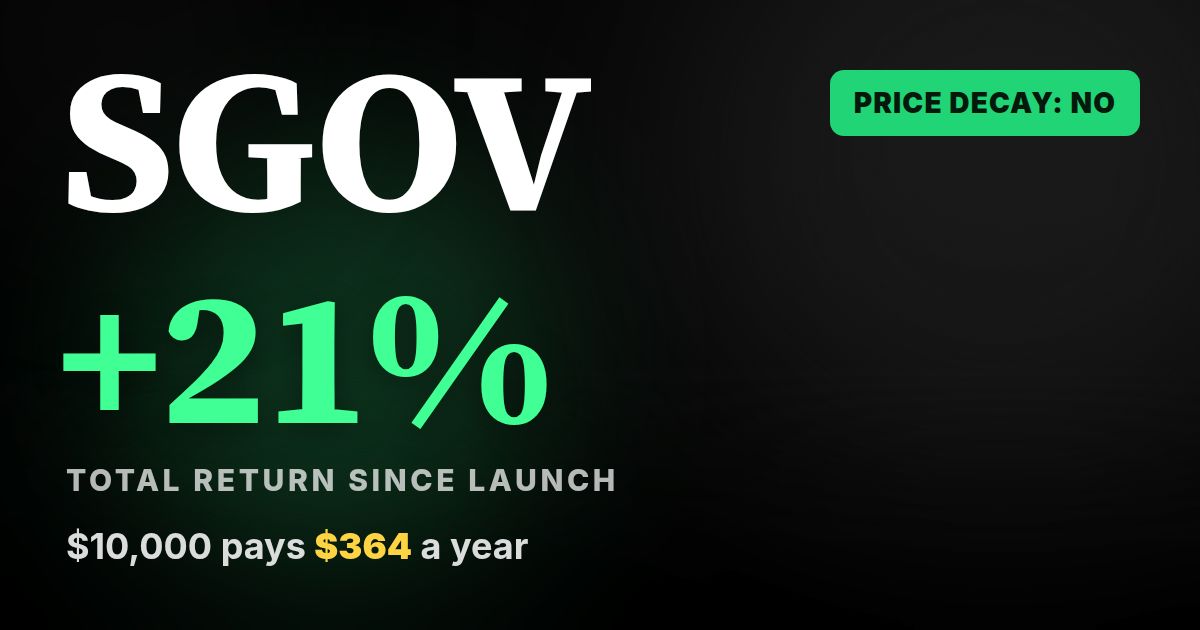
Money you need within a few years, like a house down payment, doesn't belong in stocks. Some people park that cash in a short-term Treasury fund like SGOV, which recently showed a yield of 3.6%. It is a cash-like holding, not a bond fund for your long-term mix, and its yield will change with interest rates.
Common mistakes
- Adding "just one more" fund. Once you add a growth fund, a dividend fund and a thematic fund, you have a different, more complicated portfolio with overlap. If you want a tilt, keep it small. See the VOO review or the best growth ETFs for context, and remember they mostly overlap with a total market fund.
- Using leveraged funds as a shortcut. Funds like TQQQ reset daily and can lose money in choppy markets even when the index rises. I explain this in the leveraged ETF decay guide. They are not a core holding.
- Chasing last year's winner. If international lags for a few years, that doesn't mean it is broken. Diversification only works if you hold things that are out of favor.
- Skipping bonds to chase returns, then selling in a crash. A bond slice you can live with beats a perfect allocation you abandon.
- Ignoring fees and taxes. Compare expense ratios, and think about which account holds which fund. Bond funds are often held in tax-advantaged accounts because their income is taxed as ordinary income. Confirm the details with a tax professional.
- Checking every day. This portfolio is built to be ignored for months at a time.
Edge cases and variations
Two-fund version. Some people skip bonds at 30 and hold only U.S. and international stocks. That is simpler, and it works if you truly can stomach big drops. Just know you are taking all the risk.
S&P 500 instead of total market. A fund like VOO (about $1.07T in assets) holds large U.S. companies. It overlaps heavily with a total market fund, so many investors treat them as close substitutes. Total market adds small and mid-sized companies.
Growth tilt. If you want more growth, you could use a fund like QQQ on top of your core, but it concentrates you in large tech-heavy names. The SCHG vs QQQ comparison shows how that decision looks. For more ideas, browse GrowthETFs.com. Total return figures for different funds start on different dates, so they are not an apples-to-apples comparison.
Dividend-focused tilt. A fund like SCHD could be added for income, but at 30 most people are better served by reinvesting and keeping it simple. If dividends are your focus, the rankings on TopDividendETFs.com go deeper.
Quick checklist
- Account chosen (401(k) match first, then IRA, then taxable).
- Target split written down (for example 60/30/10).
- One low-cost fund picked for each slot, with fees and minimums checked.
- Automatic monthly investing turned on.
- Dividend reinvestment turned on (if it fits your account).
- Rebalance date on the calendar.
- Short-term money kept out of the stock funds.
FAQ
What is a good three-fund portfolio allocation for a 30 year old?
A common starting point is a 60/30/10 split between U.S. stocks, international stocks and bonds, or 56/24/20 if you want a bigger cushion. Choose the mix you would keep through a major market drop.
Is the three-fund portfolio good for beginners?
Yes, it is one of the simplest broadly diversified setups. Three funds, one split and one yearly rebalance. Many beginners find that easy to stick with.
Should a 30 year old have bonds at all?
It is a choice. Some hold none because they have decades to recover from drops. Others hold one or two dollars in every ten for stability and to rebalance with. Your comfort with losses should decide it.
Can I build a three-fund portfolio in a Roth IRA?
Yes. Many people do. Because of tax rules, some prefer to hold bonds in a traditional account and stocks in a Roth, but a simple version in one account is fine. Confirm limits and rules for the current year.
How much money do I need to start?
With ETFs and fractional shares, you can often start with very little. Some index mutual funds have higher minimums, so check the broker before you pick them.
Should I use a target-date fund instead?
A target-date fund is basically a three-fund portfolio in one wrapper that adjusts on its own. It is easier, but you give up control of the mix and may pay a bit more. Compare the fee and the mix first.
Benjie's bottom line
The three-fund portfolio doesn't win because it is clever. It wins because it is cheap, spread out and easy enough that you will actually keep doing it. At 30, the biggest lever is not the exact split. It is how much you contribute and how long you stay invested.
Pick a split you can live with, automate it, and leave it alone. This isn't a buy or sell signal, and your situation (income, goals, taxes and risk tolerance) matters. Do your own due diligence, and talk to a tax professional or financial planner if you have a complicated case. When you are ready to see what future contributions might become, try the dividend projection tool or the ETF screener.
How this article was made: Benjie picks every topic based on what he finds useful as a dividend investor and what readers ask about. Parts of this article were drafted with help from AI tools, then edited, fact-checked and shaped by Benjie. All fund numbers come from the TopETFs database and update daily.
Disclaimer: TopETFs.com is published by Dividend Empire LLC for educational and entertainment purposes only. We are not financial advisors, and nothing on this site is financial advice, a recommendation, or a solicitation to buy or sell any security. ETF data is compiled from public sources and fund issuers, may be delayed, inaccurate or outdated, and may differ from the fund sponsor's own figures. Yields are trailing distribution yields, are not guaranteed, and distributions may include return of capital, which reduces your cost basis and is not a measure of performance. Total returns are since each fund's inception unless noted and are not comparable across funds with different start dates. Past performance does not guarantee future results. Investing carries risk, including loss of principal. Read each fund's prospectus and consult a licensed financial advisor before investing. Dividend Empire LLC receives compensation from ETF issuers for sponsored placements, which are labeled as such.