ETF or Index Mutual Fund in a Taxable Account? The Tax Difference Explained
ETF vs index fund for a taxable account: why ETFs usually pass on fewer capital gains, when it matters, and a year-end distribution example in dollars.
The short version
- In a taxable account, ETFs usually hand you fewer surprise capital gains distributions than mutual funds, because of how shares are created and redeemed.
- A broad index mutual fund can be very tax efficient too, so the gap is often small for plain stock index funds and bigger for actively managed or trading-heavy funds.
- Mutual funds are easier for automatic dollar-based investing. ETFs are more flexible about minimums and where you can hold them. Both are fine if you pick low fees.
For a taxable brokerage account, an ETF is usually the more tax efficient choice, because it rarely pays out capital gains you did not choose to realize. An index mutual fund tracking the same index can hold up well, but it has a higher chance of sending you a year-end capital gains bill for gains you never cashed in yourself.
That is the whole tax story in two sentences. The rest of this guide covers why it happens, when it actually costs you money, what changes with minimums and automatic investing, and a worked example with dollar amounts.
Quick note: this is general education, not tax advice. Tax rules change and depend on your situation, so check the current rules or ask a tax professional.
Why ETFs usually distribute fewer capital gains
A capital gains distribution happens when a fund sells holdings at a profit and passes that gain to its shareholders. You owe tax on it in a taxable account, even if you reinvest it and even if you never sold a single share yourself.
Here is the difference in plain terms.
With a mutual fund, when other investors sell (redeem) their shares, the fund often has to raise cash. It may sell some holdings to do that. If those holdings have gone up, the fund realizes gains, and those gains get spread across everyone still in the fund. You can get taxed because someone else left.
With an ETF, most of the big creating and redeeming of shares is handled by large institutions called authorized participants. When shares are redeemed, the ETF can usually hand over a basket of the underlying stocks instead of selling them for cash. This is called an in-kind redemption. Because the fund is not selling to raise cash, it generally does not realize those gains. It can also use this process to send out its lowest-cost shares, which helps keep future gains lower.
Everyday investors like you and me mostly trade ETF shares with each other on the exchange. That does not force the fund to sell anything.
One more thing worth knowing: dividends are a separate matter. Both ETFs and mutual funds pass dividends through, and they are generally taxed the same way regardless of the wrapper. The ETF advantage is about capital gains distributions, not dividend income.
When the difference matters (and when it does not)
I want to be honest here, because this topic gets oversold. The ETF tax edge is real, but it is not equally big everywhere.
It matters more when:
- You hold in a regular taxable brokerage account, especially in a mid or high tax bracket.
- The fund is actively managed or trades a lot, so it has more gains to realize.
- The fund sees large outflows in a year, which can force mutual fund managers to sell.
- You plan to hold for many years and want control over when you realize gains.
It matters less or not at all when:
- You hold in an IRA, 401(k), Roth IRA or other tax-advantaged account. Distributions are not taxed year to year there. If that is your situation, see how many ETFs to own in a Roth IRA.
- The fund is a plain broad stock index fund. Many of these mutual funds have very small capital gains distributions in most years, because they hold stocks for a long time and trade little.
- The fund is mostly bond or cash-like. Interest is generally taxed as ordinary income either way, so the wrapper does little for you. A fund like SGOV pays out interest from short Treasuries, and that is the same kind of income whether it comes from an ETF or a mutual fund.
So for something like an S&P 500 fund, the tax gap between the ETF and the mutual fund can be tiny. For a more active strategy, it can be big. Check the fund's own history of capital gains distributions before you assume anything.
Minimums and automatic investing
Tax is only part of the decision. How you actually put money in matters just as much, because the best fund is the one you keep buying.
Minimums
Many index mutual funds have an initial minimum investment, and the amount varies by fund company and share class. Some have none. ETFs do not have a fund minimum. You need enough to buy one share, and many brokers now let you buy fractional shares, so you can start with a small dollar amount. Confirm what your broker offers.
Automatic investing
This is where mutual funds have traditionally been stronger. You can usually set up an automatic investment of an exact dollar amount, like $500 every month, straight into the fund, and the whole amount goes to work.
With ETFs, it depends on your broker. Some offer recurring buys and fractional shares, so automation works about as smoothly. Others only let you buy whole shares, which leaves small cash leftovers each time. Check this before you commit.
Trading and pricing
ETFs trade all day at market prices, so you pay a price that can differ slightly from the fund's underlying value (called NAV, or net asset value). Mutual funds trade once a day at NAV after the market closes. For a long-term buy-and-hold investor, neither is a big deal.
Where you hold it
A mutual fund from one company can be awkward or costly to hold at a different broker, sometimes with fees or restrictions. ETFs are generally easier to hold at almost any broker and to move between them. If you want flexibility, that counts.
Worked example: a year-end distribution
Let's make this concrete. These numbers are hypothetical assumptions to show the mechanics, not a forecast or a claim about any real fund.
Assume you invest $50,000 in a taxable account. Assume the mutual fund has a year where it realizes gains and distributes 3% of its value as a long-term capital gain. Assume your long-term capital gains tax rate is 15%. (Your rate may differ, so confirm the current rules.) Assume the ETF version distributes no capital gains that year.
| Item | Mutual fund | ETF |
|---|---|---|
| Amount invested | $50,000 | $50,000 |
| Gain distributed | $1,500 | $0 |
| Tax due (15%) | $225 | $0 |
| Basis after reinvesting | $51,500 | $50,000 |
In the mutual fund case, you owe $225 this year even though you did not sell anything. If you pay it from outside the account, that is $225 you could have left invested.
Now the honest part. This is not purely a free $225 saved. When you reinvest the $1,500 distribution, your cost basis goes up, so you will owe less tax on that money when you eventually sell. The ETF mostly gives you deferral and control: you pay tax when you decide to sell, not when the fund decides to sell. Over decades, deferral can be worth real money because the untaxed dollars keep compounding. But the benefit is smaller than the headline distribution suggests.
There is also a timing trap. Funds that distribute gains typically do so late in the year. If you buy a mutual fund shortly before that date, you can receive a distribution that reflects gains from earlier in the year, and you owe tax on it even though you only just got in. Your share price drops by about the distribution amount, so you end up with the same value but a tax bill.
How to decide: step by step
- Confirm the account type. If it is an IRA, Roth IRA or 401(k), the capital gains distribution issue mostly goes away. Choose on fees, convenience and what your plan offers.
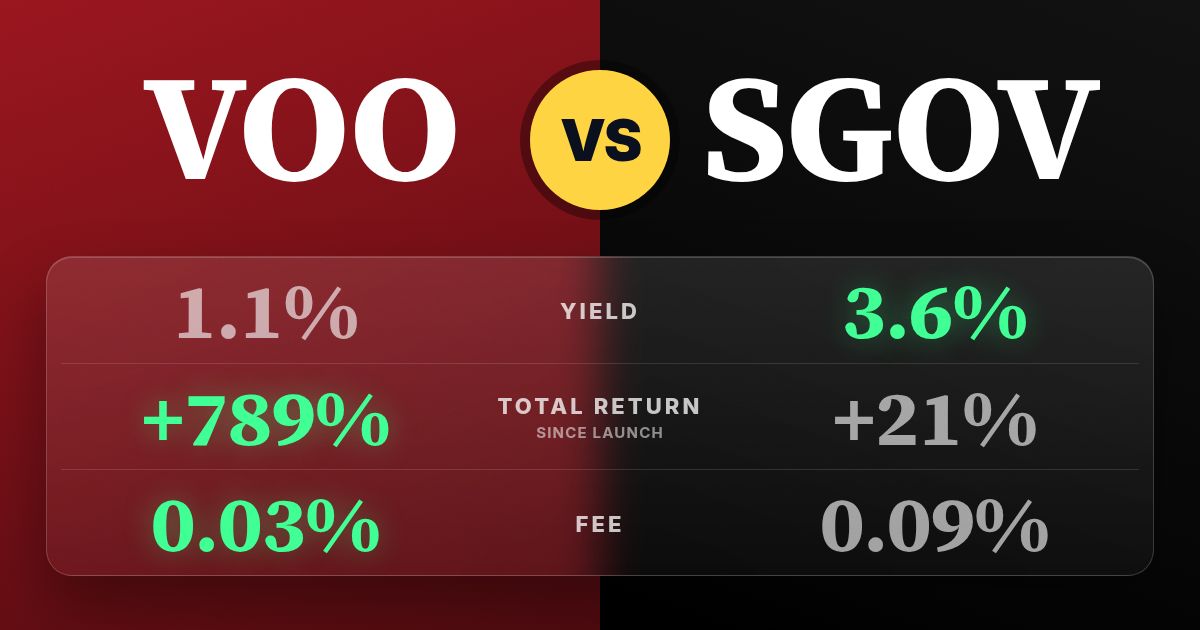
- Compare the exact funds. Pick the ETF and the mutual fund that track the same index. Compare expense ratios first. For reference, VOO lists an expense ratio of 0.03%, which shows how low broad index fees can go. You can read more in the VOO ETF review.
- Check the capital gains history. On the fund company's website, look at the past several years of capital gains distributions. Frequent distributions on a stock index fund are a flag. Zero or tiny ones are reassuring.
- Check your broker's tools. Do they offer fractional shares and recurring ETF purchases? Do they charge a fee or set a minimum for the mutual fund? This decides whether automation is easy.
- Match the habit. If you invest an exact dollar amount every payday and your broker supports it for the ETF, either works. If not, a no-fee mutual fund may keep you more consistent.
- Avoid buying right before a distribution. If you are putting in a lump sum late in the year, check the fund's expected distribution date first.
- Keep records. Reinvested distributions raise your cost basis. Your broker normally tracks this, but know that it exists so you do not pay tax twice at sale.
Common mistakes
- Assuming all ETFs are tax free. ETFs still pass through dividends and interest, and some, such as certain commodity, currency or leveraged products, are taxed differently. Do not assume the wrapper solves everything.
- Assuming every mutual fund is a tax trap. A broad index mutual fund can be perfectly fine in a taxable account.
- Selling a fund just to switch wrappers. If you hold a mutual fund with a large unrealized gain, selling it to buy the ETF can trigger the very tax you wanted to avoid. Some fund families offer a way to convert shares of certain funds to their ETF version without a sale. Ask your provider before selling.
- Ignoring the fee. A small tax edge can be wiped out by a higher expense ratio.
- Buying right before the year-end distribution. You get a tax bill with no extra value.
- Over-owning. Several funds that all hold the same big stocks can make tax tracking messier without adding diversification. A simple setup is easier to run. The guide to investing $100,000 for 10 years shows how simple mixes can work.
Edge cases worth knowing
Bond and cash funds. Interest is generally taxed as ordinary income whether you hold an ETF or a mutual fund. The capital gains advantage is not the reason to choose one over the other here.
Dividend funds. Dividends are taxable each year either way. ETF structure does not reduce them. If you are chasing income, the sister site TopDividendETFs.com covers dividend funds in depth.
Leveraged and specialized ETFs. These can behave very differently and may not have the usual tax efficiency. The article on leveraged ETF decay covers why they are a different animal altogether.
Selling later. When you sell an ETF or a mutual fund at a gain in a taxable account, you owe tax on the gain at sale. The ETF advantage is about what happens before you sell.
Where you live. State taxes and your own bracket change the math. Use a tax professional if the amounts are large.
Quick checklist
- Is this a taxable account? If not, the tax angle mostly does not apply.
- Same index, lower fee: have I compared the expense ratios?
- Have I checked the fund's past capital gains distributions?
- Does my broker support fractional shares and recurring buys for the ETF?
- Am I buying right before a year-end distribution?
- If I already own the mutual fund, have I checked the tax cost of switching?
If you want to see how fees and growth compound over time, the calculators on TopETFs are a good place to run your own numbers, and GrowthETFs.com covers growth-focused funds. For a look at how funds compare, see the best growth ETFs by total return, fees and size.
FAQ
Are ETFs more tax efficient than index funds?
Usually, yes, in a taxable account, because ETFs rarely have to sell holdings to meet redemptions and so tend to distribute fewer capital gains. For broad stock index mutual funds, the gap can be small.
Do ETFs pay capital gains distributions at all?
Some do, but many broad index ETFs distribute little or none in most years. Funds with more trading, or with unusual structures, can still distribute gains. Check the fund's history.
Do I pay tax on ETF dividends?
Yes, in a taxable account. Dividends from ETFs and mutual funds are generally taxed in the same way. The ETF structure helps with capital gains distributions, not dividend income.
Does it matter in an IRA or Roth IRA?
Not much. Distributions inside tax-advantaged accounts are not taxed year to year, so you can choose based on fees, minimums and convenience.
Can I switch from a mutual fund to an ETF without paying tax?
Selling the mutual fund can trigger tax on any gain. Some fund companies allow certain mutual fund shares to be converted to ETF shares without a sale. Ask your provider and confirm the rules before acting.
Is an ETF or index fund better for automatic investing?
Mutual funds are usually simpler for exact dollar amounts. ETFs can work just as well if your broker offers fractional shares and recurring purchases.
Benjie's bottom line
If I am investing in a regular taxable account and the ETF and the index mutual fund charge about the same, I lean toward the ETF for the tax control. That is not a buy call, just how I think about the trade-off. The lower odds of a surprise distribution, and the flexibility of deciding when to realize gains, are real advantages.
But I would not let the structure override the basics: low fees, broad diversification and the habit of investing every month. A good index mutual fund you actually keep buying beats an ETF you never get around to setting up. Look at your account type, your broker's tools and your tax situation, and consider asking a tax professional if the numbers are big. This isn't financial advice, so do your own due diligence.
ETFs in this story
How this article was made: Benjie picks every topic based on what he finds useful as a dividend investor and what readers ask about. Parts of this article were drafted with help from AI tools, then edited, fact-checked and shaped by Benjie. All fund numbers come from the TopETFs database and update daily.
Disclaimer: TopETFs.com is published by Dividend Empire LLC for educational and entertainment purposes only. We are not financial advisors, and nothing on this site is financial advice, a recommendation, or a solicitation to buy or sell any security. ETF data is compiled from public sources and fund issuers, may be delayed, inaccurate or outdated, and may differ from the fund sponsor's own figures. Yields are trailing distribution yields, are not guaranteed, and distributions may include return of capital, which reduces your cost basis and is not a measure of performance. Total returns are since each fund's inception unless noted and are not comparable across funds with different start dates. Past performance does not guarantee future results. Investing carries risk, including loss of principal. Read each fund's prospectus and consult a licensed financial advisor before investing. Dividend Empire LLC receives compensation from ETF issuers for sponsored placements, which are labeled as such.